
Family & Cosmetic Dental PLLC
- Home
- Our Practice
- Services
- Patient Information
- Blog
- Contact Us
Last Updated: September 10, 2026
A dental emergency is any condition involving severe pain, uncontrolled bleeding, infection, or trauma to a tooth or jaw that requires immediate professional attention. Knowing what's a true emergency versus what can wait saves you money, stress, and unnecessary trips. At Family & Cosmetic Dental PLLC, we field these calls constantly from families across Glendale and Peoria.
If you're in severe pain, bleeding that won't stop, or you've lost a tooth, call for emergency dental services immediately. A dull ache or small chip with no exposed nerve can usually wait for a next-day appointment.
The American Dental Association's guidance on dental emergencies draws a similar line, grouping urgent situations by whether they threaten the tooth or your overall health.
Call for urgent dental care right away if you notice any of the following:
These situations worsen with time. A tooth that could have been saved same-day may need an emergency extraction if you wait.
Some problems aren't emergencies but still deserve a call first thing. A small chip without pain, a lost filling with mild sensitivity, or a loose crown that isn't causing discomfort can typically wait until the next business day. Call to schedule, and meanwhile keep the area clean and avoid chewing on that side.
For a knocked-out permanent tooth, act within 30 minutes. Handle it by the crown, not the root. Rinse gently with milk or saline, then reinsert it in the socket and bite down on clean gauze. If that isn't possible, store the tooth in milk or saliva and get to a dental clinic immediately.
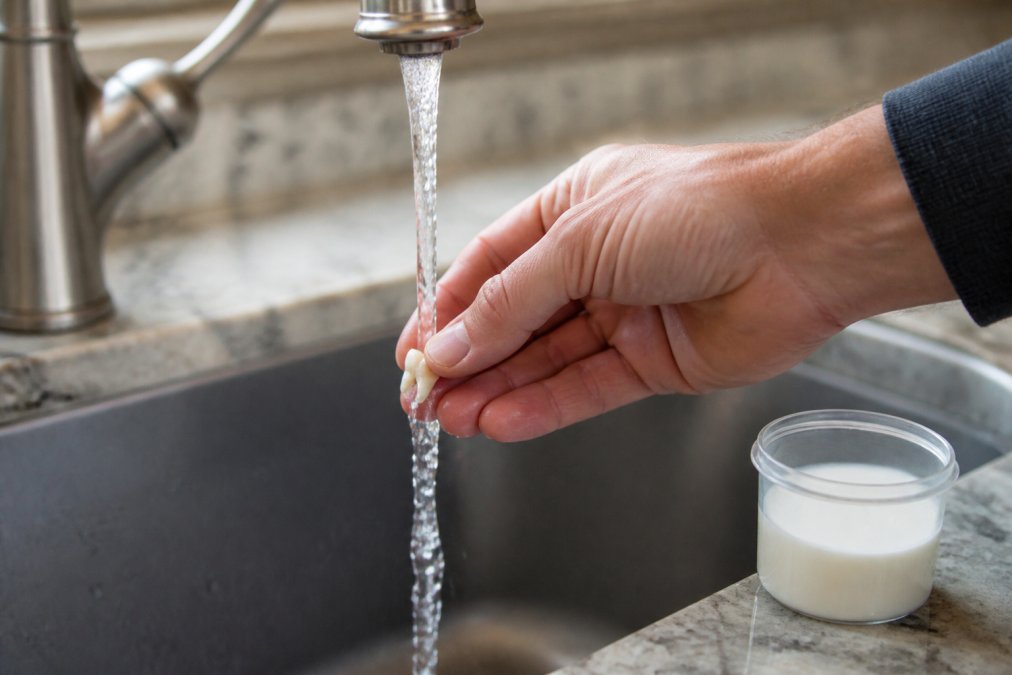
What most people get wrong is scrubbing the tooth or letting it dry out. Both kill the periodontal ligament cells that allow reattachment. The ADA's Save Your Tooth tips confirm that milk is the best transport medium when you can't reimplant the tooth right away.
For other oral trauma: control bleeding with gauze, apply a cold compress, and get seen. Don't try to straighten a displaced tooth yourself.
A chipped tooth with no pain can wait a day or two. A cracked tooth that hurts when you bite down needs urgent attention because the crack may extend into the pulp. Rinse with warm salt water, cover sharp edges with dental wax or sugar-free gum, and avoid hot or cold foods until you're seen.
A dental abscess is a pocket of pus caused by a bacterial infection, and it will not resolve on its own. Warning signs include a persistent throbbing toothache, swelling in the gum or cheek, a bad taste, fever, and tenderness. If swelling spreads toward your eye or throat, or you have trouble swallowing or breathing, skip the dentist and go to the emergency room.
Abscesses can become life-threatening when the infection spreads. Don't drain one at home or rely on antibiotics alone, the source, usually a dead or damaged tooth, needs a root canal or extraction.
Same-day appointments for emergency dental care are usually available if you call early and describe your symptoms clearly. Lead with the specific problem: "I have severe pain in my lower right molar and swelling in my jaw." That helps the front desk triage you and reserve the right slot.
A few practical steps improve your odds:
Family & Cosmetic Dental PLLC accepts a wide variety of PPO insurance plans and offers flexible payment options. If you're a new patient, say so upfront so the team can prepare.
The rule of thumb: if the problem starts and ends in your mouth, call a dental office. If it threatens your airway, breathing, or consciousness, call 911 or go to the nearest emergency room. For everything in between, use the triage path below.
Work through these questions in order. Stop at the first "yes."
Emergency rooms stabilize life-threatening conditions; they don't restore teeth. An ER visit for dental pain typically ends with pain relief or antibiotics and a referral, the tooth still needs a root canal, extraction, or restoration. That means two bills and two waits for one problem.
There are exceptions. If infection has spread into the soft tissue of the face or neck, the ER is the correct first stop because it can become systemic. Once stabilized, a dentist still has to treat the source.
| Situation | Best First Call | Why |
|---|---|---|
| Severe toothache, no swelling | Emergency dental office | ERs don't perform root canals |
| Knocked-out permanent tooth | Dental office (act within 30 minutes) | Reimplantation is time-sensitive |
| Facial swelling with fever | ER first, then dentist | Infection may be systemic |
| Swelling closing the eye or affecting swallowing | ER or 911 | Airway and spread risk |
| Chipped tooth, no pain | Next-day dental visit | Not urgent |
| Suspected jaw fracture | Emergency room | Requires imaging and stabilization |
| Uncontrolled bleeding | Emergency room | May need medical intervention |
The American Dental Association's emergency care resources note that most ER visits for dental pain end with pain relief and a referral rather than a definitive fix. Going straight to a dental clinic when the situation allows saves a step, and often a second bill.
At the ER, bring your medication list, allergies, and your dental office's contact info so the team can coordinate follow-up. At a dental office, bring your insurance card, photo ID, and any recent X-ray. Say what happened, when it started, and what you've tried at home, that history shapes how quickly you're seen.
Over-the-counter pain relievers like ibuprofen can take the edge off while you wait, but they won't treat the cause. Apply a cold compress for swelling, rinse with warm salt water, sleep with your head elevated, and avoid aspirin on the gum, which can burn tissue.
Dental anxiety is real and keeps people from calling until the problem is severe. If that sounds familiar, tell the team when you book. Family & Cosmetic Dental PLLC takes a conservative, compassionate approach focused on a stress-free experience. One patient, Renee C, has been with the practice since around 2005 and credits the team with helping her manage severe dental anxiety well enough to keep up with six-month cleanings.
Emergency dental costs depend on three things, what's actually wrong, what your plan covers, and whether you've hit your annual maximum. What you can control is asking the right questions before treatment starts.
Emergency visits usually break into two buckets: the diagnostic visit and the treatment itself.
Because every case is different, the only reliable number is the one your dentist gives after seeing the X-ray. Ask for a written treatment plan with procedure codes and estimated out-of-pocket cost before you agree to anything.
If you're paying out of pocket, you have more options than most people realize. In-house membership plans bundle an exam, X-rays, and a cleaning for an annual fee, then discount other procedures. Third-party financing splits larger treatment into monthly payments, and some practices offer a cash or prompt-pay discount. Ask which the office offers.
Two factors move the number most: how long you wait, and whether the tooth can be saved. A problem caught early is often a filling; three weeks later it's often a root canal and a crown. A tooth that could have been saved same-day may need an extraction plus replacement, the most expensive path of all. Calling early is better for your health and usually cheaper.
Post-emergency care matters as much as the visit. Follow medication instructions, avoid chewing on the treated side, and keep the area clean. Most patients need a follow-up to confirm healing and complete restorative work, such as a crown after a root canal.
Preventing the next emergency comes down to routine care. Regular exams and cleanings catch small problems before they become painful. Wear a mouthguard during sports, avoid ice and hard candy, and don't use your teeth as tools.
A simple way to stay ahead of trouble:
Dental emergencies rarely announce themselves at a convenient time, and the difference between saving a tooth and losing one often comes down to how quickly you act. Family & Cosmetic Dental PLLC provides conservative, compassionate emergency dental care for families across Glendale and Peoria, with same-day appointments, many accepted PPO insurance plans, and flexible payment options including third-party financing. If you're dealing with pain, swelling, or a broken tooth, don't wait it out. Call Family & Cosmetic Dental PLLC and get the care you need today.
True round-the-clock dental offices are rare, but some local practices and referral lines offer after-hours emergency dental support. If severe swelling, fever, or trouble breathing or swallowing is involved, go to a hospital emergency room instead of waiting. For tooth pain, a broken tooth, or a lost filling, call your dentist's office first. Many practices, including Family & Cosmetic Dental PLLC, reserve same-day slots during regular hours and can guide you by phone after hours on what to do until you are seen.
Pick the tooth up by the crown, never the root, and rinse it gently with milk or saline if it is dirty. If you can, place it back into the socket and bite down softly on a clean cloth to hold it. If reinserting is not possible, keep the tooth in a cup of milk or inside your cheek. Getting to emergency dental services within 30 to 60 minutes gives the best chance of saving the tooth, so call ahead while someone else drives.
Go in right away for uncontrolled bleeding, a knocked-out or badly fractured tooth, swelling that spreads toward your eye or neck, fever with tooth pain, or pain that keeps you from sleeping or eating. A small chip with no pain, a dull ache, or a lost filling with mild sensitivity usually can wait a day or two, but you should still call for the earliest opening. When in doubt, call the office and describe your symptoms; the team can help you decide.
Costs vary widely by procedure, so ask for an estimate before treatment begins. A limited exam and X-rays cost far less than a root canal, emergency extraction, or crown. If you have PPO insurance, your plan may cover part of the urgent visit; check your annual maximum and deductible first. Family & Cosmetic Dental PLLC accepts many PPO plans, offers an in-house savings plan, and works with third-party financing so you can spread out larger bills. Call the office for current pricing.




