
logo (2)
Family & Cosmetic Dental PLLC

What to Expect During a Root Canal: Step by Step

Contact Us

Table of Contents

Last Updated: September 4, 2026

What to Expect During a Root Canal: Your Step-by-Step Guide

Root canal therapy removes infected or damaged dental pulp from inside a tooth, relieving pain and saving the natural tooth structure. Performed under local anesthesia, it is comparable to receiving a standard filling. At Family & Cosmetic Dental PLLC, we prioritize a stress-free experience, and understanding the process is the first step toward feeling at ease.

The procedure removes infected nerve tissue and bacteria from within the tooth's canals, cleans and shapes the interior, and seals it to prevent future issues. This guide covers the signs you need treatment, how to prepare, the step-by-step clinical process, pain management, recovery, aftercare, and root canal vs. extraction.

Signs You Need a Root Canal: Recognizing the Symptoms

Symptoms can be unmistakable or subtle. Persistent tooth pain when chewing or applying pressure is a primary indicator, as is prolonged sensitivity to hot or cold. You might also notice a recurring pimple-like bump on your gums, which can indicate an abscess, or darkening of the tooth.

Other red flags include deep decay or a cracked tooth that has compromised the enamel, allowing bacteria to reach the inner pulp. Swelling and tenderness in the nearby gums, along with a general feeling of inflammation in the jaw, are also common. The American Association of Endodontists notes that severe toothache pain is often a sign that the pulp is infected and requires professional evaluation American Association of Endodontists patient education. If you are experiencing any combination of these symptoms, a thorough examination with x-ray imaging is necessary to determine if the dental pulp is infected and whether root canal therapy is the appropriate treatment.
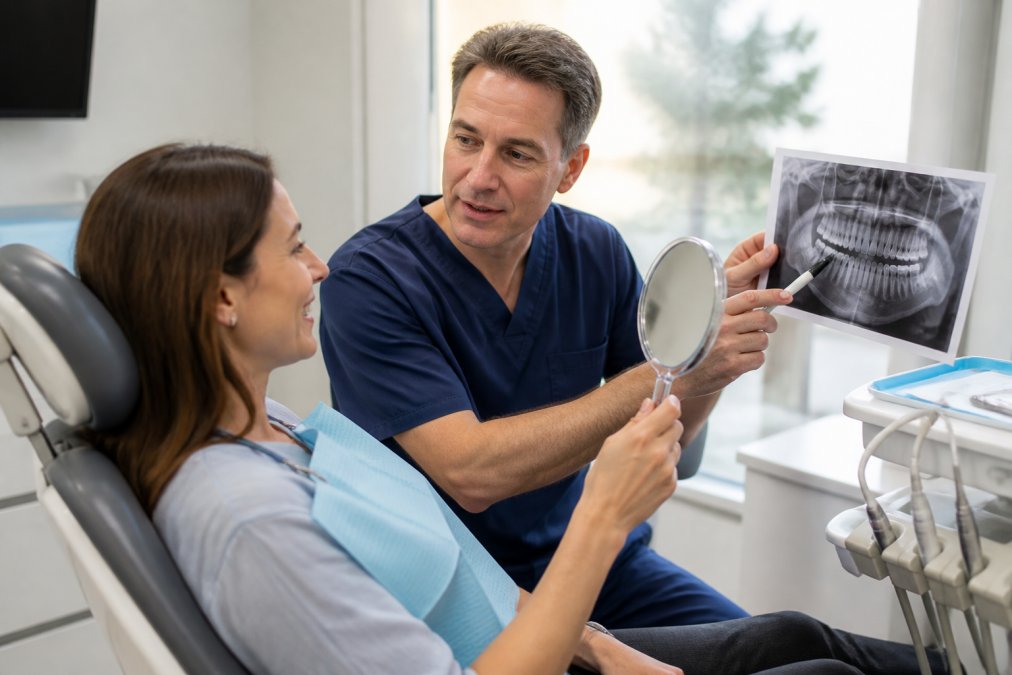
A calm dentist in a modern, bright office showing a relaxed adult patient a digital x-ray on a monitor, explaining the findings while the patient holds a small mirror

Before the Procedure: What to Do and What to Ask

A little planning can reduce anxiety and help you feel in control. Here’s a practical checklist for the days before your appointment.

Medical and Medication Review

Compile a list of all medications you take, prescription, over-the-counter, and supplements. Certain medications, such as blood thinners (e.g., warfarin, apixaban) or bisphosphonates, can affect bleeding or healing. Also inform your dentist of any allergies, especially to local anesthetics or antibiotics, and any conditions like diabetes, heart disease, or a compromised immune system.

What to Eat and Drink

You can eat normally before a root canal, but avoid heavy, greasy foods. If you’re receiving sedation, your dentist will likely instruct you to fast for 6-8 hours beforehand. On the day, eat a light meal if you’re not fasting, stay hydrated, and avoid caffeine.

Arranging Transportation and Time Off

If you’re having sedation, you’ll need someone to drive you home. Even without sedation, the procedure can take 60-90 minutes, and you may feel tired or numb afterward. Plan to take the rest of the day off; most patients return to normal activities the next day.

Managing Dental Anxiety: A Step-by-Step Plan

Dental anxiety is common. Here’s how to prepare:

  • Communicate openly - Tell your dentist about your anxiety during the consultation. They can explain each step, agree on a stop signal (like raising your hand), and offer sedation options.
  • Ask about sedation - Options range from nitrous oxide (laughing gas) to oral sedatives (like diazepam) or IV sedation. Each has different levels of consciousness and recovery times. Your dentist will recommend the best fit based on your anxiety level and the procedure’s complexity.
  • Use distraction techniques - Bring headphones and listen to music or a podcast during the procedure. Many offices also offer TVs or virtual reality headsets to help you relax.
  • Practice relaxation breathing - Slow, deep breaths (inhale for 4 seconds, hold for 4, exhale for 6) can calm your nervous system. Try it in the waiting room and during the procedure.
  • Consider cognitive-behavioral strategies - Remind yourself that the procedure is relieving pain, not causing it. Visualize a calm place, or count your breaths to stay grounded.

Financial Transparency: What to Ask About Costs and Insurance

Call your dental office and ask for a written estimate that includes:

  • The root canal procedure fee - This varies by tooth type (front teeth are less complex than molars) and by provider (general dentist vs. endodontist).
  • The cost of the final crown - This is a separate procedure and is often not included in the root canal estimate.
  • Any additional fees - Such as for sedation, x-rays, or a follow-up visit.

Insurance Coverage: Most dental insurance plans cover a percentage of root canal therapy, typically 50%-80% after your deductible is met (the American Dental Association). Ask your insurance provider or the dental office’s billing coordinator for a pre-treatment estimate to determine your exact out-of-pocket costs before you commit.

Payment Options: If you don’t have insurance or have high out-of-pocket costs, ask about:

  • Dental discount plans - These offer reduced fees for members.
  • In-house payment plans - Many practices offer interest-free or low-interest monthly installments.
  • Third-party financing - Companies like CareCredit or LendingClub Patient Solutions offer healthcare-specific credit cards with promotional financing options.

Questions to Ask Your Dentist

To leave your consultation feeling fully informed, ask these specific questions:

  1. How many visits will this require? (Some cases are single-visit, others need two.)
  2. Who will perform the procedure, you or an endodontist? (Endodontists are specialists in root canals and may be recommended for complex cases.)
  3. What type of anesthesia or sedation do you recommend for my anxiety level?
  4. What is the estimated cost for the root canal and the crown, and what does my insurance cover?
  5. What are the signs of complications I should watch for after the procedure?
  6. When can I return to work or exercise?
  7. How long will the temporary filling last, and when will I get my permanent crown?

By preparing medically, financially, and psychologically, you transform a daunting experience into a manageable one. Your dental team is there to support you, don’t hesitate to voice your concerns.

The Root Canal Procedure: What Happens Step by Step

Understanding the mechanics of the procedure can significantly reduce fear of the unknown. Here is the step-by-step sequence:

  1. Anesthesia and Isolation: The dentist administers a local anesthetic, a numbing agent, to ensure the tooth and surrounding area are completely numb. A dental dam, a small rubber sheet, is then placed over the tooth to keep it dry and free of saliva during the procedure.
  2. Access and Removal: A small opening is made in the crown of the tooth to access the pulp chamber. Using specialized instruments, the dentist removes the infected or damaged nerve tissue and dental pulp from the chamber and root canals.
  3. Cleaning and Shaping: The canals are meticulously cleaned, shaped, and disinfected to eliminate any remaining bacterial infection and debris. This step is critical for preventing reinfection.
  4. Sealing the Canal: Once clean, the canals are filled with a biocompatible material called gutta-percha and sealed with an adhesive cement to prevent future bacterial entry.
  5. Temporary Filling: A temporary filling is placed in the opening to protect the tooth between visits while it heals.
  6. Final Restoration: At a follow-up visit, usually a week or two later, the temporary filling is replaced with a permanent restoration, typically a crown, to restore the tooth's full function and strength.

A single-visit root canal is often possible for less complex cases, but multi-visit treatment may be recommended if there is a persistent infection or intricate tooth anatomy. The process is designed to be a comfortable, routine procedure when performed by an experienced clinician.

Does a Root Canal Hurt? Anesthesia and Pain Management

The procedure itself should not hurt because local anesthesia numbs the tooth and surrounding gums. The reputation for pain comes from the severe inflammation and infection that brings a patient to the office. Modern techniques and anesthetics have made the experience far more comfortable than folklore suggests.

BOOK YOUR EXPERIENCE TODAY! →

The dentist will ensure the anesthetic is fully effective before starting, and you should feel pressure or vibration, but not sharp pain. If you do feel discomfort at any point, you can raise your hand and more numbing agent will be administered. For patients with high anxiety, sedation options can help you stay relaxed and calm throughout the appointment. The American Association of Endodontists emphasizes that root canal treatment is designed to relieve pain, not cause it AAE on root canal safety and comfort. After the anesthesia wears off, some soreness and sensitivity in the area is normal, but this is typically manageable with over-the-counter pain relievers and resolves within a few days. This post-operative care is a standard part of the recovery process.

Root Canal Recovery Time: What to Expect Afterward

Root canal recovery time is generally short, with most patients returning to normal activities within a day or two. The most common after-effects are mild jaw soreness and tenderness in the treated tooth, usually well-controlled with over-the-counter anti-inflammatory medication.

Expect the tooth to feel different for a short period. Avoid chewing on that side until the final restoration is placed, as the tooth is more brittle without its full crown. If you experience severe pain, worsening swelling, or a reaction to medication, contact your dental office immediately. A follow-up visit is essential for proper healing and the permanent restoration.

Post-Root Canal Care Instructions: Dos and Don'ts

Proper care after your root canal is essential for a smooth recovery and long-term success. The first 48 hours are critical. Here’s a guide, including foods to eat and avoid, to help you heal and protect the temporary filling.

The First 24-48 Hours: What to Eat and Avoid

Your mouth will be numb for a few hours, so eating immediately is not recommended. Once the numbness wears off, stick to soft, lukewarm foods that require minimal chewing and avoid anything that could dislodge the temporary filling.

Foods to Enjoy (Soft, Nutrient-Dense Options):

  • Smoothies and protein shakes - Blend fruits, yogurt, or protein powder for a filling meal that requires no chewing. Avoid using a straw, as suction can dislodge the blood clot or temporary filling.
  • Mashed potatoes, applesauce, and oatmeal - These are gentle on the tooth and easy to swallow.
  • Scrambled eggs, yogurt, and cottage cheese - Provide protein without hard textures.
  • Soup (lukewarm, not hot) - Broth-based soups or blended soups like tomato or butternut squash are soothing. Avoid chunky soups that require chewing.
  • Pasta (well-cooked), soft bread, and pancakes - These are safe if cut into small pieces and chewed on the opposite side.

Foods to Avoid (For the First 48 Hours):

  • Crunchy or hard foods - Nuts, chips, popcorn, hard candies, and ice can crack the temporary filling or irritate the tooth.
  • Sticky or chewy foods - Caramel, taffy, gum, and dried fruit can pull out the temporary filling.
  • Extremely hot or cold foods - Sensitivity is normal, and extreme temperatures can trigger discomfort. Stick to lukewarm options.
  • Acidic foods and beverages - Citrus fruits, tomatoes, and soda can irritate the gum tissue and the exposed dentin.
  • Alcohol and tobacco - These can delay healing and increase the risk of infection. Avoid for at least 48 hours, or longer if your dentist advises.

Activity and Oral Hygiene Adjustments

  • Rest for the first 24 hours - Avoid strenuous exercise, as increased blood flow can lead to throbbing or bleeding. Light activity is fine after that.
  • Brush gently - Use a soft-bristled toothbrush and avoid the treated area for the first day. After 24 hours, you can brush normally but be gentle around the gumline.
  • Floss carefully - Do not floss directly around the treated tooth until your dentist says it’s safe, as you might dislodge the temporary filling.
  • Rinse with warm salt water - Mix 1/2 teaspoon of salt in 8 ounces of warm water and gently swish for 30 seconds, 2-3 times a day, starting 24 hours after the procedure. This helps soothe gums and reduce bacteria.

When to Call Your Dentist

Contact your dentist immediately if you experience:

  • Severe pain that worsens or is not relieved by over-the-counter pain medication.
  • Swelling that increases after the first 48 hours or spreads to your face or neck.
  • A visible reaction to medication - such as a rash, hives, or difficulty breathing (call 911 if breathing is affected).
  • The temporary filling falls out - This leaves the tooth vulnerable to infection and fracture. Call your dentist to have it replaced promptly.
  • Signs of infection - Fever, chills, or a foul taste in your mouth that persists.

Why the Final Crown Is Non-Negotiable

A root canal removes the tooth’s blood and nerve supply, making it more brittle over time. Without a permanent crown, the tooth is prone to fracture. The temporary filling is not designed for long-term use, and skipping the final crown can lead to tooth loss. Most dentists recommend placing the permanent crown within a few weeks.

By following these dietary and care instructions, you can minimize discomfort and set the stage for a successful recovery. The goal is to protect the tooth and prevent reinfection.

Root Canal vs. Extraction: Making the Right Choice

When a tooth is severely infected, patients often wonder if it is better to have it pulled. While extraction is a faster, less expensive immediate solution, it comes with long-term consequences that a root canal avoids. Saving your natural tooth is almost always the preferred option.

Consideration Root Canal Therapy Tooth Extraction
Goal Save the natural tooth Remove the problem tooth
Procedure Clean, disinfect, and seal the inner canals Surgically remove the entire tooth
Recovery 1-2 days of mild soreness Longer, with a higher risk of complications like dry socket
Follow-up Crown placement to restore function Possible need for implant or bridge
Long-term Impact Preserves bite and jawbone structure Can lead to bone loss and shifting of adjacent teeth

Extraction and replacement often involve a more costly restorative process, such as an implant or bridge. Extraction also removes the natural tooth structure that stimulates the jawbone, which can lead to bone deterioration over time. For most patients, root canal therapy is the more conservative choice that preserves your smile and avoids the cascade of dental issues that follow a missing tooth.


Facing a root canal can be daunting, but understanding the process transforms a frightening unknown into a manageable, routine procedure. The key is to address the problem early, communicate openly with your dental team about your anxiety, and commit to follow-up care. At Family & Cosmetic Dental PLLC, we combine conservative, compassionate care with a focus on patient education. We offer flexible financial options and accept a wide variety of PPO insurance plans. Get started with Family & Cosmetic Dental PLLC and book your experience today.

Frequently Asked Questions

How long does a root canal procedure take?

Most root canal procedures are completed in one to two appointments, with each visit lasting about 60 to 90 minutes. The exact time depends on the tooth's location and the complexity of the infection. Molars, which have multiple roots, often take longer than front teeth. Your dentist will give you a more specific estimate after examining your x-ray imaging. The first appointment focuses on removing the infected dental pulp and cleaning the canal, while a second visit may be scheduled for a permanent restoration like a crown.

Will I need a crown after my root canal?

In most cases, yes. A tooth that has had root canal therapy becomes more brittle because the nerve tissue and blood supply have been removed. A crown provides a protective cap that allows you to chew normally and prevents the tooth from fracturing. Your dentist will likely place a temporary filling immediately after the procedure, then recommend a permanent crown during a follow-up visit. The crown placement is a crucial part of the treatment, as it seals the canal and restores the tooth's full function and structure.

How painful is a root canal, really?

With modern anesthesia and sedation dentistry, the procedure itself feels similar to getting a standard filling. Your dentist will use a local anesthetic to numb the area completely before starting. Many patients report that the most uncomfortable part is sitting still with their mouth open. The real pain relief comes from the procedure itself, which removes the infected dental pulp causing your toothache. Some soreness in the days after is normal, but it is usually manageable with over-the-counter pain medication and fades quickly as your recovery time progresses.

What should I eat after a root canal?

Wait until the numbness from the local anesthesia wears off before eating to avoid biting your cheek or tongue. For the first few days, stick to soft foods that require minimal chewing, such as yogurt, smoothies, soup, and mashed potatoes. Avoid very hot foods, hard or crunchy snacks, and sticky candies that could dislodge the temporary filling. Also, try to chew on the opposite side of your mouth. Following these post-root canal care instructions helps protect the treated area and supports a smooth recovery.


Welcome to Family & Cosmetic Dental PLLC
With over 30 years of experience, Dr. Adrian Pulkrabek and his team combine science and artistry to prioritize your comfort and oral health. From routine cleanings to complete smile redesigns, we offer state-of-the-art restorative and cosmetic dentistry in a friendly, welcoming environment.
Why Choose Us
20+ Years of Clinical Experience
Comprehensive Cosmetic Services
State-of-the-Art Technology
Anxiety-Free Atmosphere
Same-Day Emergency Care

BOOK YOUR EXPERIENCE TODAY!

EXCELLENT
Google star 1Google star 2Google star 3Google star 4Google star 5
Based on 102 reviews
Posted on Google Google
Charles B profile picture
Charles B
Google star 1Google star 2Google star 3Google star 4Google star 5Trustindex verifies that the original source of the review is Google.
Great Dentist!! Office staff, simply put, are just darn good people. Kathleen always greets you with a smile and a friendly welcome. Sarah is the Dental Assistant and Hygienist; she's wonderful, always making sure I feel comfortable and it shows by how she treats a patient (me). All 3 are very professional!! The office is very clean, and the front desk area is organized and well maintained by Kathleen. That being said, Dr. Pulkrabek is an excellent Dentist. Explains every procedure very well, detailed and also making sure I understand and he makes sure I feel comfortable during my visit. One of the great benefits when I'm in the Dental chair and Dr. Pulkrabek is working his magic on my teeth, It's always been practically painless Dentistry. I'm always extremely pleased with the outcome of the Dr's work on my Ivorys!! My overall experience has been outstanding with each visit. I highly recommend making an appointment with Dr. Pulkrabek for your Dental needs and concerns.
Posted on Google Google
Renee C profile picture
Renee C
Google star 1Google star 2Google star 3Google star 4Google star 5Trustindex verifies that the original source of the review is Google.
I have been a patient of Dr. Pulkrabek and his team since probably 2005/2006. I have pretty severe dental anxiety and he is the only reason I’m able to show up for my six month cleanings. He is so gentle, thorough, knowledgeable, and fun. He is efficient. Contemplating a move out of the State and joked that we would probably keep him as our provider and just come back for cleanings. He is that good. Such an amazing dentist.
Posted on Google Google
Barbara L profile picture
Barbara L
Google star 1Google star 2Google star 3Google star 4Google star 5Trustindex verifies that the original source of the review is Google.
I have always been pleased with the staff and the doctor. The office manager is professional, and her experience shows as she engages with clients. The doctors assistant is professional, and very pleasant to deal with. The doctor himself, is knowledgeable, professional and always treats me as if I’m his only patient and I have no complaints about my dental care from him.
Posted on Google Google
Jordynn B profile picture
Jordynn B
Google star 1Google star 2Google star 3Google star 4Google star 5Trustindex verifies that the original source of the review is Google.
Amazing Dentist! Staff was very friendly and I got an appointment very quickly! They gave me a great referral and helped with all my questions and concerns!
Posted on Google Google
Megan T profile picture
Megan T
Google star 1Google star 2Google star 3Google star 4Google star 5Trustindex verifies that the original source of the review is Google.
Amazing dentist! Everyone in the office is amazing and professional. They made me feel at ease and this was the first time going to the dentist. They explain each procedure and how it will benefit your teeth and health.
Posted on Google Google
Candice H profile picture
Candice H
Google star 1Google star 2Google star 3Google star 4Google star 5Trustindex verifies that the original source of the review is Google.
Dr. Pulkrabek and his staff are great. We have been coming here for years and would highly recommend.
Posted on Google Google
Ahmed M profile picture
Ahmed M
Google star 1Google star 2Google star 3Google star 4Google star 5Trustindex verifies that the original source of the review is Google.
Dr. Adrian was super helpful and explain everything to me! Super easy visit. Extremely friendly staff that helped me with all the insurance and billing!
Posted on Google Google
Julian M profile picture
Julian M
Google star 1Google star 2Google star 3Google star 4Google star 5Trustindex verifies that the original source of the review is Google.
Dr. Pulkrabek is a great dentist, and he does a very good job cleaning and examining teeth. He found a cavity growing underneath a prior filling after taking a closer look. The office staff and dental hygienists are all friendly and professional. I am looking forward to my next visit.
Posted on Google Google
Natasha L profile picture
Natasha L
Google star 1Google star 2Google star 3Google star 4Google star 5Trustindex verifies that the original source of the review is Google.
Great office! Everyone is super helpful and does a great job
Visit Us Today
Monday:
8:00am - 6:00pm
Tuesday:
8:00am - 6:00pm
Wednesday:
8:00am - 4:00pm
Thursday:
8:00am - 3:00pm
Friday - Sunday
Closed
Call (602) 866-9825