
Family & Cosmetic Dental PLLC
- Home
- Our Practice
- Services
- Patient Information
- Blog
- Contact Us
Last Updated: September 3, 2026
Tooth discoloration happens in two distinct ways, and understanding the difference is crucial for choosing the right approach to whiten teeth safely. At Family & Cosmetic Dental PLLC, we help patients recognize which type of staining they're dealing with so they can select the most effective treatment.
Extrinsic stains affect the outer layer of your tooth, called the enamel. These surface stains develop from external sources like coffee, red wine, tobacco, and dark-colored foods. They're the easier type to address because they sit on top of the tooth structure rather than within it.
Intrinsic stains, by contrast, occur inside the tooth structure, in the dentin layer beneath the enamel. These develop from internal causes like aging, certain medications, excessive fluoride during childhood, or trauma to the tooth. Intrinsic stains require stronger bleaching agents and typically take longer to fade.
The reason this distinction matters: surface stains often respond well to whitening toothpaste or professional cleaning, while deeper stains need hydrogen peroxide or carbamide peroxide to penetrate and lighten the dentin. Knowing which type you have prevents wasting time on ineffective methods.
Your teeth naturally become darker as you age. The enamel thins over decades, exposing more of the naturally yellowish dentin beneath. This is a normal biological process, not a sign of poor oral hygiene.
Additionally, the dentin itself accumulates stains over time as microscopic pores trap pigments from foods, beverages, and environmental exposure. Plaque and tartar buildup can also contribute to a dull, discolored appearance. Understanding this natural progression helps set realistic expectations for whitening results and maintenance.
Whitening products rely on two primary bleaching agents that chemically break down stain molecules. Both work through oxidation, a process that penetrates the tooth structure to lighten discoloration from within.
Hydrogen peroxide is a fast-acting agent used in professional-strength products and many over-the-counter strips. It breaks down quickly, delivering results in shorter timeframes, typically 30 minutes to a few hours. Professional treatments use higher concentrations, ranging from 15% to 35%, while retail products contain lower percentages for safety (the American Dental Association).
Carbamide peroxide is a slower-acting compound that breaks down into hydrogen peroxide and urea over time. Custom-fitted trays from your dentist typically use this agent because its gradual release allows for safer, longer wear periods without increasing sensitivity risk as dramatically. Carbamide peroxide concentrations in professional trays range from 10% to 22% (the FDA).
The key difference: hydrogen peroxide works faster but carries higher sensitivity risk, while carbamide peroxide works gradually and is gentler on sensitive teeth. Your choice depends on your timeline, sensitivity history, and how much enamel protection you need during treatment.
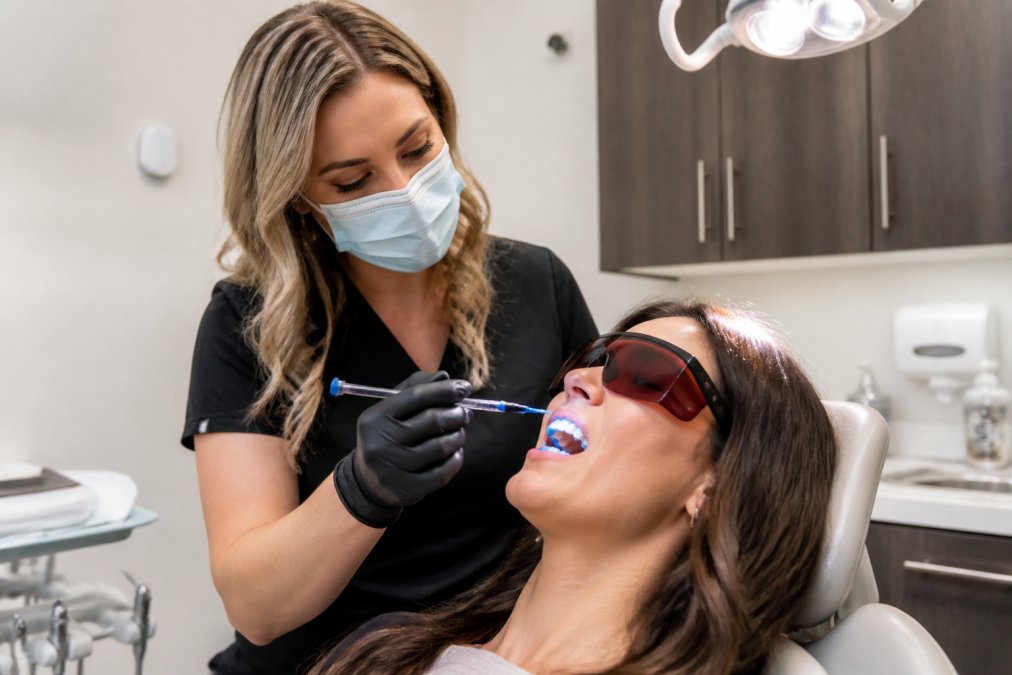
Choosing between professional and at-home whitening involves weighing speed, cost, safety, and long-term results. Each approach has genuine advantages and real limitations.
In-office treatments deliver the fastest, most dramatic results. Your dentist applies high-concentration bleaching gel directly to your teeth, often using an accelerating light to enhance the whitening process. Most patients see noticeable shade improvement in a single 60-90 minute session.
The safety advantage is significant: your dentist protects your gums with a barrier, monitors the bleaching process, and stops immediately if sensitivity becomes problematic. Professional oversight minimizes enamel damage and gum irritation. Results typically last 6-12 months with proper maintenance, though this varies based on your diet and habits.
The trade-off is cost and scheduling. Professional whitening requires a dental appointment and carries a higher upfront investment compared to retail options.
Custom trays represent the middle ground between professional in-office treatment and over-the-counter strips. Your dentist takes an impression of your teeth and fabricates a tray that fits your mouth precisely. You then apply professional-strength gel at home and wear the tray for 30 minutes to several hours daily.
Results appear gradually over 1-2 weeks, but the precision fit means less gel contacts your gums, reducing irritation. You maintain control over the process and can adjust wear time based on sensitivity. Many patients achieve results comparable to in-office treatment with fewer appointments.
Retail whitening strips and gels offer convenience and lower cost. Strips use a thin layer of peroxide gel adhered to plastic that molds loosely to your teeth. Results appear within days, though typically less dramatic than professional methods.
The limitation is consistency. Since strips don't fit precisely, some areas whiten unevenly, and gel may contact gums, causing irritation. Results tend to fade faster than professional treatments because lower-concentration formulas provide less penetrating power.
Sensitivity during whitening is common, but it's manageable with the right strategies. Understanding why it happens helps you prevent or minimize discomfort.
Bleaching agents open microscopic pores in your enamel to penetrate and lighten stains. This temporary porosity allows irritants to reach the dentin layer, which contains nerve endings. The result is sharp, temporary sensitivity, usually to cold or pressure.
Sensitivity intensifies if your enamel is already thin or if you have gum recession exposing the root surface. Existing cavities or cracks also increase sensitivity risk. People with naturally sensitive teeth experience more pronounced discomfort during whitening.
Start with a desensitizing toothpaste containing potassium nitrate or strontium chloride at least one week before whitening. These ingredients block sensation pathways to the nerve. Continue using desensitizing toothpaste throughout your whitening treatment and for several weeks after.
Reduce wear time gradually. Instead of wearing strips or trays for the full recommended duration, start with half the time and increase only if sensitivity remains manageable. Professional-grade treatments applied by your dentist allow for immediate adjustment if discomfort becomes severe.
Avoid acidic foods and beverages during whitening, as they soften enamel and increase sensitivity. Skip acidic drinks like orange juice, soda, and wine for at least 48 hours before and after treatment. Rinse your mouth with water after consuming acidic foods to neutralize the pH.
Whitening results aren't permanent because your teeth naturally accumulate stains over time. Understanding the timeline helps you plan touch-ups and adjust your habits.
Professional in-office whitening typically lasts 6-12 months before noticeable fading occurs. Custom tray results last 3-6 months with consistent use. Over-the-counter strips fade fastest, usually within 2-4 months. The variation depends on your diet, smoking status, and how frequently you consume staining substances.
Intrinsic stains fade more slowly than extrinsic stains because they're deeper in the tooth structure. Results also vary based on your natural tooth color. Teeth with more yellow undertones whiten more visibly than teeth with gray undertones.
Certain foods and beverages contain chromogens, pigmented molecules that readily stain teeth. Red wine, coffee, black tea, and dark cola are the primary culprits. Berries, beets, soy sauce, and tomato-based sauces also contribute to staining.
Acidic foods and drinks weaken enamel, making teeth more porous and susceptible to staining. Limit citrus fruits, vinegar-based dressings, and sports drinks. When you do consume these items, rinse your mouth with water immediately to reduce contact time.
Brush twice daily with a whitening toothpaste containing mild abrasives that remove surface stains without damaging enamel. Floss daily to remove plaque between teeth, where stains accumulate. Use an electric toothbrush if possible, as it removes plaque more effectively than manual brushing.
Avoid smoking and tobacco products, which cause rapid yellowing and staining. If you use tobacco, quitting provides immediate and long-term benefits beyond tooth color. Drink staining beverages through a straw to minimize contact with teeth, and rinse your mouth with water after consuming them.
Some people prefer gentler approaches to whiten teeth safely through natural ingredients or everyday products. These methods work more gradually but align with preferences for minimal intervention.
Whitening toothpaste uses mild abrasives and low-concentration peroxide to remove surface stains during regular brushing. Products containing hydrogen peroxide are more effective than purely mechanical options, though results appear gradually over weeks of consistent use.
The advantage is simplicity: whitening toothpaste integrates seamlessly into your existing routine. The limitation is effectiveness on intrinsic stains. Toothpaste alone rarely lightens deep discoloration because the contact time is too brief and the concentration too low to penetrate significantly.
Baking soda is a mild abrasive that removes surface stains through gentle scrubbing action. Mixing baking soda with water creates a paste for occasional use. While it's inexpensive and natural, overuse can damage enamel because it's too abrasive for frequent application.
Oil pulling, an ancient practice involving swishing coconut oil in your mouth, lacks scientific evidence for whitening effectiveness. Water flossing and regular flossing remove plaque and debris that contribute to dull appearance, supporting overall brightness through maintenance rather than active whitening.
Whitening safety depends on choosing appropriate products, using them correctly, and monitoring your teeth's response. Several considerations protect your enamel and gums during treatment.
Enamel cannot regenerate once damaged, making protection essential. Use only products with the ADA seal of acceptance, which indicates the product has been tested for safety and efficacy. Avoid whitening products from unknown sources or unverified online retailers.
Protect your gums by ensuring whitening gel contacts only your teeth. Custom-fitted trays minimize gum exposure, while over-the-counter strips require careful application to avoid gel spillover. If you experience gum irritation, swelling, or pain, discontinue use immediately and consult your dentist.
Limit whitening frequency. Professional treatments should occur no more than every 3-6 months. Excessive whitening accelerates enamel thinning and increases sensitivity. Your dentist can recommend a safe schedule based on your enamel thickness and sensitivity history.
Consult your dentist before whitening if you have cavities, existing dental work like veneers or crowns, gum disease, or severe enamel erosion. Whitening products don't work on artificial dental materials, and they can worsen existing dental problems.
If you experience severe sensitivity, gum pain, or uneven whitening after using over-the-counter products, schedule an appointment. Your dentist can assess whether damage has occurred and recommend professional treatment or protective measures.
Pregnant women should avoid whitening treatments, as safety data is limited. People taking certain medications that cause tooth discoloration should consult their dentist about timing, as some conditions require treating the underlying cause rather than cosmetic whitening.
The safest approach combines realistic expectations with professional guidance. Start by discussing your whitening goals with your dentist, who can assess your enamel thickness, existing sensitivity, and suitability for different methods.
If you choose professional whitening, in-office treatment or custom trays from your dentist offer the highest safety profile because a dental professional oversees the process. If you prefer over-the-counter options, select products with ADA seals and follow instructions precisely. Never exceed recommended wear times or application frequency.
Maintain results through consistent oral hygiene: brush twice daily, floss once daily, and rinse after consuming staining foods and beverages. Use a whitening toothpaste for maintenance between deeper whitening treatments. Schedule regular dental checkups to monitor enamel health and address any sensitivity or damage early.
Remember that whitening works best on natural teeth and doesn't affect existing dental work. If you have crowns, veneers, or bonding on visible teeth, discuss timing with your dentist so all visible tooth-colored restorations match your newly whitened teeth.
According to the American Dental Association's guidance on tooth whitening, professional supervision ensures safety while maximizing results. The ADA recommends discussing any whitening plan with your dentist before starting, especially if you have existing dental conditions.
Achieving a brighter smile safely requires understanding your specific situation and choosing the method that aligns with your needs. Family & Cosmetic Dental PLLC helps patients navigate whitening options with personalized recommendations based on enamel health, sensitivity, and desired results. Our team provides professional whitening treatments, custom tray fabrication, and ongoing guidance to maintain your results while protecting your teeth. Whether you're considering professional whitening or exploring at-home options, we're here to ensure your smile gets brighter without compromising dental health. BOOK YOUR EXPERIENCE TODAY!
Professional whitening supervised by a dentist is often considered a very safe method to whiten teeth. Your dentist can assess your enamel health, existing dental work, and sensitivity before recommending a treatment. In-office procedures use high-concentration bleaching agents under professional oversight, while custom-fitted trays from your dentist minimize gum irritation. Over-the-counter options like whitening strips are generally safe when used as directed, but professional guidance can help ensure optimal results with minimal risk.
Professional teeth whitening uses higher concentrations of bleaching agents (hydrogen peroxide or carbamide peroxide) applied by trained dentists, delivering faster, more dramatic results in one or two sessions. At-home kits contain lower concentrations and require consistent daily use over weeks. Professional treatments offer better control over application to protect gums and enamel. At-home kits are convenient and affordable but carry risks of uneven whitening, gum irritation, and sensitivity if not used carefully. Both can be safe when appropriate for your dental condition.
To manage tooth sensitivity during whitening, use a desensitizing toothpaste containing potassium nitrate or fluoride for a period before starting treatment. Wear whitening trays for shorter durations initially, gradually increasing time as your teeth adjust. Avoid acidic foods and drinks that soften enamel before whitening sessions. Use a soft-bristled toothbrush and avoid aggressive brushing. If sensitivity persists, consult your dentist about professional fluoride treatments or alternative whitening methods.
Professional whitening results typically last 6 months to 2 years depending on lifestyle habits and the method used. At-home whitening with custom trays may last 4-6 months with maintenance. Results fade faster if you consume staining foods and drinks like coffee, red wine, and dark berries, or if you smoke. Maintaining results requires touch-up treatments every 6-12 months and consistent oral hygiene including daily flossing and brushing. Using whitening toothpaste between treatments and avoiding acidic beverages can extend the longevity of your whitening results.
Over-the-counter whitening strips are generally safe for enamel when used as directed, as they contain lower concentrations of peroxide than professional treatments. Look for products with the ADA seal of acceptance, which indicates they meet safety standards. However, overuse or improper application can cause temporary sensitivity and gum irritation. If you have thin enamel, existing dental work, or sensitive teeth, consult your dentist before using over-the-counter strips.
Strong oral hygiene is essential for successful whitening and preventing new stains. Regular brushing removes surface stains and plaque that can dull teeth, while daily flossing removes debris between teeth that causes dark spots and discoloration. An electric toothbrush can be effective at removing surface stains. Before whitening, professional cleaning removes tartar buildup that blocks whitening agents from reaching tooth surfaces. After whitening, maintaining excellent oral hygiene through brushing twice daily, flossing, and regular dental checkups preserves results and keeps teeth bright longer.
Yes, yellow teeth can be whitened effectively, though results depend on the cause. Yellow teeth from extrinsic stains (surface stains from coffee, tea, or smoking) respond very well to whitening treatments. Intrinsic stains (discoloration inside the tooth from aging, medication, or trauma) require stronger professional treatments and may take longer to lighten. Teeth naturally yellow with age as enamel thins and dentin (the yellow layer beneath) becomes more visible. Professional whitening can lighten teeth by several shades, though the degree of improvement varies based on your starting shade and enamel thickness. Your dentist can assess whether your yellow teeth will respond well to whitening.




