
logo (2)
Family & Cosmetic Dental PLLC

What to Eat After a Root Canal: A Practical Recovery Guide

Contact Us

Table of Contents

Eating Right After Your Root Canal: What Happens First

What you eat after a root canal procedure matters more than most patients expect. The first few hours and days are when your tooth and gums are most sensitive, so the right foods help you stay comfortable while you heal.

Many patients leave the dentist's chair with some numbness, and that's when accidents can happen. You can bite your cheek or tongue without realizing it.

After the numbness fades, the tooth may feel tender. Gentle pressure from chewing can make it ache. That's normal, and it usually improves over the next few days. Soft, cool, or lukewarm foods are the safest choice during this stage.

Follow your dentist's specific aftercare instructions. Every case is different, and your provider knows the details of your treatment. If you have questions about your recovery, call the office.

Soft Foods to Eat After a Root Canal

Soft foods are your best friend during the first few days. They take little effort to chew, so they put less stress on the treated tooth.
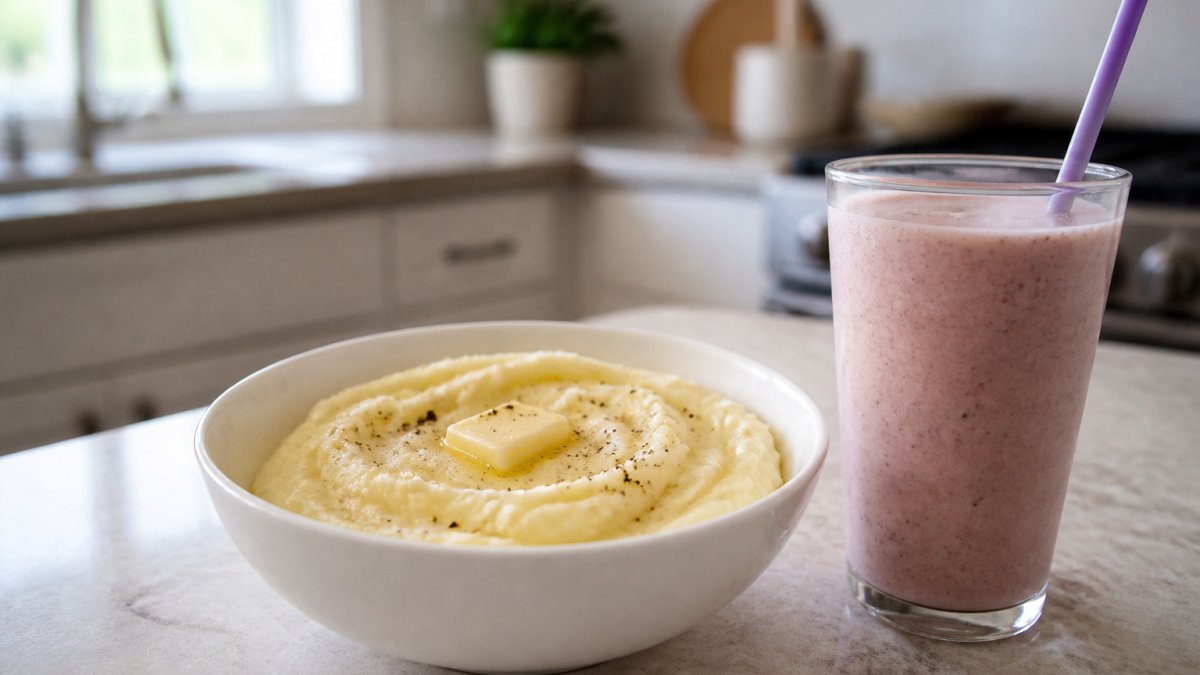
Creamy mashed potatoes and a fresh smoothie to eat after a root canal sitting on a kitchen counter

Good choices include:

  • Mashed potatoes: Smooth and easy to swallow
  • Scrambled eggs: Soft and filling
  • Yogurt and Greek yogurt: Cool and high in protein
  • Applesauce and mashed bananas: Naturally sweet and soft
  • Smoothies: Easy to drink and a good way to get nutrients
  • Protein shakes: Helpful when you have a small appetite
  • Soup: Lukewarm broth is gentle on sensitive teeth
  • Soft cereals and oatmeal: Warm, filling, and simple to eat
  • Cooked pasta or noodles: Soft when cooked well
  • Pudding and ice cream: Cool and comforting

Keep the temperature in mind. Lukewarm or cool foods usually feel better than very hot ones. Hot food can make a sensitive tooth ache more.

Try to eat small portions. Chew on the side of your mouth away from the treated tooth when you can.

The foods below are the ones this guide recommends in the first few days, grouped by how they're best eaten.

Food Why it works Temperature note
Mashed potatoes Smooth and easy to swallow Not stated
Scrambled eggs Soft and filling Not stated
Yogurt and Greek yogurt Cool and high in protein Cool
Applesauce and mashed bananas Naturally sweet and soft Not stated
Soup Gentle on sensitive teeth Lukewarm
Oatmeal Warm, filling, simple to eat Warm
Pudding and ice cream Cool and comforting Cool

Eating While Your Mouth Is Still Numb

Numbness is the most underestimated risk in the first few hours after a root canal. The local anesthetic that keeps you comfortable during treatment also shuts down the sensory feedback in your lip, cheek, tongue, and gum. You can bite down on soft tissue with full force and feel nothing until the anesthetic wears off. Numbness can last for several hours, and the exact time depends on the anesthetic used and how your body responds to it.

That is why the safest rule is to wait until sensation returns before eating anything you need to chew. A common pattern is to drink clear liquids or eat very soft, cool foods only after you have confirmed that feeling is back.

How to test whether the numbness is gone

Do not rely on a clock alone. Use a simple sensation check:

  • Gently tap your lip and cheek with a clean finger and compare the treated side to the other side.
  • Touch the gum near the treated tooth with your tongue and notice whether you can feel pressure and texture normally.
  • Say a few words and notice whether your speech sounds normal; slurred speech is a sign that numbness is still active.

When both sides feel the same, it is safe to start with soft food. If you are unsure, wait another 30 minutes and test again.

What to do if you are hungry before the numbness fades

You do not have to go hungry. Choose options that require no chewing and no temperature sensation:

  • Cool water or an electrolyte drink sipped slowly
  • A chilled protein shake or meal-replacement drink taken in small sips
  • Smooth applesauce or a pureed fruit pouch, taken from a spoon on the untreated side
  • Cool broth, tested on your wrist first so you do not burn a numb mouth

Avoid straws during this window. Suction can disturb a fresh blood clot or a temporary restoration, and it is easy to drink too fast when you cannot feel your mouth.

Watch Out
Never test food temperature with a numb lip or tongue. A burn or a bite to the cheek can go unnoticed for hours and turn into a painful ulcer. Test liquids on the inside of your wrist instead.

Signs the numbness is lasting too long

Contact your dental office if numbness is still complete many hours later, if it spreads, or if you notice weakness in your face, as these patterns are worth a professional check.

Once sensation is back, move on to soft foods and chew on the side opposite the treated tooth. The next section covers which foods are safest and how to build meals around them.

Foods to Avoid After a Root Canal

Some foods can irritate a treated tooth or put pressure on it. Avoiding them for a while helps your tooth heal more comfortably. (Source: recommendations for managing post-operative discomfort)

Limit or avoid:

  • Hard foods: Raw carrots, hard candy, and nuts
  • Chewy foods: Bagels, tough steak, and caramels
  • Crunchy foods: Chips, popcorn, and crusty bread
  • Sticky foods: Taffy and gummy candy, which can pull at a healing area
  • Very hot or very cold items: These can trigger sensitivity
  • Sugary and acidic foods: These may irritate tender tissue

Also be careful with hard or sharp food pieces. Tiny fragments, like seeds or chips, can get stuck around the tooth and cause discomfort.

When Can I Eat Normally After a Root Canal?

There is no single number of days that fits every patient. The safe return to a normal diet depends on three things: whether the numbness has worn off, how tender the tooth feels under pressure, and what kind of restoration is protecting the tooth right now. Use those three signals instead of a fixed calendar.

BOOK YOUR EXPERIENCE TODAY! →

A staged timeline based on your symptoms

Stage 1: Numbness still present. Eat nothing that requires chewing. Sip cool liquids and soft purees only, and test sensation before each meal as described above.

Stage 2: Numbness gone, tooth tender. This is usually the first 24 to 72 hours. Stick to soft, lukewarm foods and chew on the opposite side.

Stage 3: Tenderness fading. Over the next several days to about a week, add soft proteins such as flaked fish, scrambled eggs, and tender ground meat, plus well-cooked vegetables and soft pasta.

Stage 4: Comfortable with soft and moderate textures. You can begin reintroducing normal foods gradually, starting with the least challenging items and watching for soreness the next day.

Stage 5: Full normal diet. Return to your usual foods when you can chew on the treated side without discomfort. If a particular food still causes a sharp twinge, wait a few more days and try again.

Why your restoration changes the timeline

A root canal removes the nerve and pulp, but it does not restore the tooth's outer strength. Until a permanent restoration is placed, the tooth is more vulnerable to fracture, and a fracture can mean losing the tooth.

  • Temporary filling: Usually softer and less durable than a permanent filling. Avoid hard, crunchy, and sticky foods on that tooth, and do not floss aggressively around it.
  • Temporary crown: Often made of acrylic or a thin resin. It can crack or come off if you bite into hard or sticky food. Chew on the opposite side and avoid ice, hard candy, bagels, and caramel until the permanent crown is seated.
  • Permanent crown or filling: Once placed and adjusted, you can usually return to normal chewing, but give yourself a few days to confirm the bite feels even.
Pro Tip
Ask your dentist at the end of treatment which restoration you are leaving with and when the permanent one is scheduled. That single answer tells you more about your eating timeline than any general rule.

What to do if a temporary restoration comes loose

If a temporary filling or crown loosens or falls out, save the piece if you can, keep the area clean, and call your dental office promptly. Do not try to reattach it with household glue or over-the-counter adhesive. Avoid chewing on that side until you are seen, because the exposed tooth can be sensitive and more prone to damage.

When the timeline is not going as expected

Mild tenderness that improves day by day is normal. Contact your treating dentist if you have pain that is getting worse instead of better, swelling, fever, a bad taste or odor, or if chewing remains difficult beyond a couple of weeks.

If you are planning a follow-up or need your permanent restoration placed, our team can help you schedule the next step and answer questions about what to eat in the meantime.

How Long Root Canal Soreness Lasts and Managing Tenderness While Eating

Soreness after a root canal is common. Many people notice tenderness for a few days, and some feel mild discomfort for a week or more. The tooth may feel different when you bite, even after the pain fades.

Tips to manage tenderness while eating:

  • Chew on the side opposite the treated tooth
  • Cut food into small pieces
  • Eat slowly and take breaks
  • Choose lukewarm or room-temperature foods
  • Use over-the-counter pain relievers as directed, if your dentist approves them

Keep your meals balanced even if your appetite is low. Protein shakes, yogurt, and smoothies can help you get nutrition when solid food feels like too much. Staying hydrated also supports healing. Sip water throughout the day.

Contact your dentist if you have severe pain that doesn't improve, swelling, fever, or trouble eating for more than a few days. These signs may mean you need a dental checkup. Only a dental professional can evaluate what is causing your symptoms and how to treat them.

Booking Your Follow-Up Visit at Family & Cosmetic Dental PLLC

A follow-up visit helps make sure your root canal is healing well and that your tooth is protected for long-term use. At Family & Cosmetic Dental PLLC, we are here to answer your questions and help you plan the next steps. If your root canal is complete and your tooth needs a restoration, our team can walk you through your options. You can schedule a visit with our Glendale office to discuss restorative care,

Call or visit our office to book your follow-up and ask any questions about eating and recovery.

Frequently Asked Questions

How long after a root canal can I eat normally?

Most people can return to a normal diet within a few days, though the timing depends on how the tooth is restored and how sore it feels. Many patients start with soft foods for the first 24 to 48 hours, then gradually add firmer foods as tenderness fades. Avoid chewing hard or sticky foods on the treated side until your dentist confirms the tooth is fully restored, especially if a temporary filling or crown is in place. If chewing still hurts after several days, contact your dental office for an evaluation rather than waiting it out.

Can I drink coffee after a root canal?

Coffee is generally fine once the numbness has worn off, but very hot or very cold drinks can irritate a sensitive tooth for a short time. Let hot beverages cool to lukewarm during the first day or two. Avoid using the treated side to sip or swish if the area is tender. If you notice sharp pain when drinking, mention it at your follow-up visit so your dentist can check the tooth.

Should I chew on the treated side after a root canal?

It is usually best to avoid chewing on the treated side until the tooth is permanently restored, typically with a crown. The tooth can be fragile while it is healing, and a temporary filling may not withstand heavy pressure. Chew on the opposite side when possible, cut food into small pieces, and avoid nuts, hard candy and chewy items. Your dental team can tell you when it is safe to resume normal chewing.

What should I avoid eating after a root canal?

Avoid hard, crunchy and sticky foods such as nuts, popcorn, hard candy, caramel, chips and ice. Very hot or very cold foods can also aggravate tenderness. Limit sugary and acidic items during the first few days, since they can irritate the area and the surrounding gums. Skip anything that requires biting into tough meat or crusty bread on the treated side until your dentist gives the all-clear.

Welcome to Family & Cosmetic Dental PLLC
With over 30 years of experience, Dr. Adrian Pulkrabek and his team combine science and artistry to prioritize your comfort and oral health. From routine cleanings to complete smile redesigns, we offer state-of-the-art restorative and cosmetic dentistry in a friendly, welcoming environment.
Why Choose Us
20+ Years of Clinical Experience
Comprehensive Cosmetic Services
State-of-the-Art Technology
Anxiety-Free Atmosphere
Same-Day Emergency Care

BOOK YOUR EXPERIENCE TODAY!

EXCELLENT
Google star 1Google star 2Google star 3Google star 4Google star 5
Based on 102 reviews
Posted on Google Google
Charles B profile picture
Charles B
Google star 1Google star 2Google star 3Google star 4Google star 5Trustindex verifies that the original source of the review is Google.
Great Dentist!! Office staff, simply put, are just darn good people. Kathleen always greets you with a smile and a friendly welcome. Sarah is the Dental Assistant and Hygienist; she's wonderful, always making sure I feel comfortable and it shows by how she treats a patient (me). All 3 are very professional!! The office is very clean, and the front desk area is organized and well maintained by Kathleen. That being said, Dr. Pulkrabek is an excellent Dentist. Explains every procedure very well, detailed and also making sure I understand and he makes sure I feel comfortable during my visit. One of the great benefits when I'm in the Dental chair and Dr. Pulkrabek is working his magic on my teeth, It's always been practically painless Dentistry. I'm always extremely pleased with the outcome of the Dr's work on my Ivorys!! My overall experience has been outstanding with each visit. I highly recommend making an appointment with Dr. Pulkrabek for your Dental needs and concerns.
Posted on Google Google
Renee C profile picture
Renee C
Google star 1Google star 2Google star 3Google star 4Google star 5Trustindex verifies that the original source of the review is Google.
I have been a patient of Dr. Pulkrabek and his team since probably 2005/2006. I have pretty severe dental anxiety and he is the only reason I’m able to show up for my six month cleanings. He is so gentle, thorough, knowledgeable, and fun. He is efficient. Contemplating a move out of the State and joked that we would probably keep him as our provider and just come back for cleanings. He is that good. Such an amazing dentist.
Posted on Google Google
Barbara L profile picture
Barbara L
Google star 1Google star 2Google star 3Google star 4Google star 5Trustindex verifies that the original source of the review is Google.
I have always been pleased with the staff and the doctor. The office manager is professional, and her experience shows as she engages with clients. The doctors assistant is professional, and very pleasant to deal with. The doctor himself, is knowledgeable, professional and always treats me as if I’m his only patient and I have no complaints about my dental care from him.
Posted on Google Google
Jordynn B profile picture
Jordynn B
Google star 1Google star 2Google star 3Google star 4Google star 5Trustindex verifies that the original source of the review is Google.
Amazing Dentist! Staff was very friendly and I got an appointment very quickly! They gave me a great referral and helped with all my questions and concerns!
Posted on Google Google
Megan T profile picture
Megan T
Google star 1Google star 2Google star 3Google star 4Google star 5Trustindex verifies that the original source of the review is Google.
Amazing dentist! Everyone in the office is amazing and professional. They made me feel at ease and this was the first time going to the dentist. They explain each procedure and how it will benefit your teeth and health.
Posted on Google Google
Candice H profile picture
Candice H
Google star 1Google star 2Google star 3Google star 4Google star 5Trustindex verifies that the original source of the review is Google.
Dr. Pulkrabek and his staff are great. We have been coming here for years and would highly recommend.
Posted on Google Google
Ahmed M profile picture
Ahmed M
Google star 1Google star 2Google star 3Google star 4Google star 5Trustindex verifies that the original source of the review is Google.
Dr. Adrian was super helpful and explain everything to me! Super easy visit. Extremely friendly staff that helped me with all the insurance and billing!
Posted on Google Google
Julian M profile picture
Julian M
Google star 1Google star 2Google star 3Google star 4Google star 5Trustindex verifies that the original source of the review is Google.
Dr. Pulkrabek is a great dentist, and he does a very good job cleaning and examining teeth. He found a cavity growing underneath a prior filling after taking a closer look. The office staff and dental hygienists are all friendly and professional. I am looking forward to my next visit.
Posted on Google Google
Natasha L profile picture
Natasha L
Google star 1Google star 2Google star 3Google star 4Google star 5Trustindex verifies that the original source of the review is Google.
Great office! Everyone is super helpful and does a great job
Visit Us Today
Monday:
8:00am - 6:00pm
Tuesday:
8:00am - 6:00pm
Wednesday:
8:00am - 4:00pm
Thursday:
8:00am - 3:00pm
Friday - Sunday
Closed
Call (602) 866-9825