
Family & Cosmetic Dental PLLC
- Home
- Our Practice
- Services
- Patient Information
- Blog
- Contact Us
Last Updated: October 13, 2026
Professional teeth whitening uses high-concentration bleaching agents applied by a dentist to lighten tooth stains and discoloration. Unlike over-the-counter products, in-office whitening delivers faster, more dramatic results because dentists apply stronger formulas under professional supervision. At Family & Cosmetic Dental PLLC, we understand that professional teeth whitening sensitive teeth requires careful treatment planning to minimize discomfort while achieving your desired shade improvement.
The whitening process works by breaking down stain molecules on and within the tooth structure. Dentists apply a protective barrier to your gums, then use a whitening gel containing peroxide or hydrogen peroxide. Some practices use an activating light to enhance the bleaching process. The gel sits on your teeth for 15-30 minute intervals, and the dentist may reapply it several times during a single appointment.
Professional supervision matters because dentists can assess your tooth enamel condition, identify existing cracks or sensitivity issues, and adjust the treatment strength accordingly. They can also apply fluoride treatments or desensitizing agents before and after whitening to reduce sensitivity side effects. This level of customization isn't possible with store-bought whitening strips or trays.
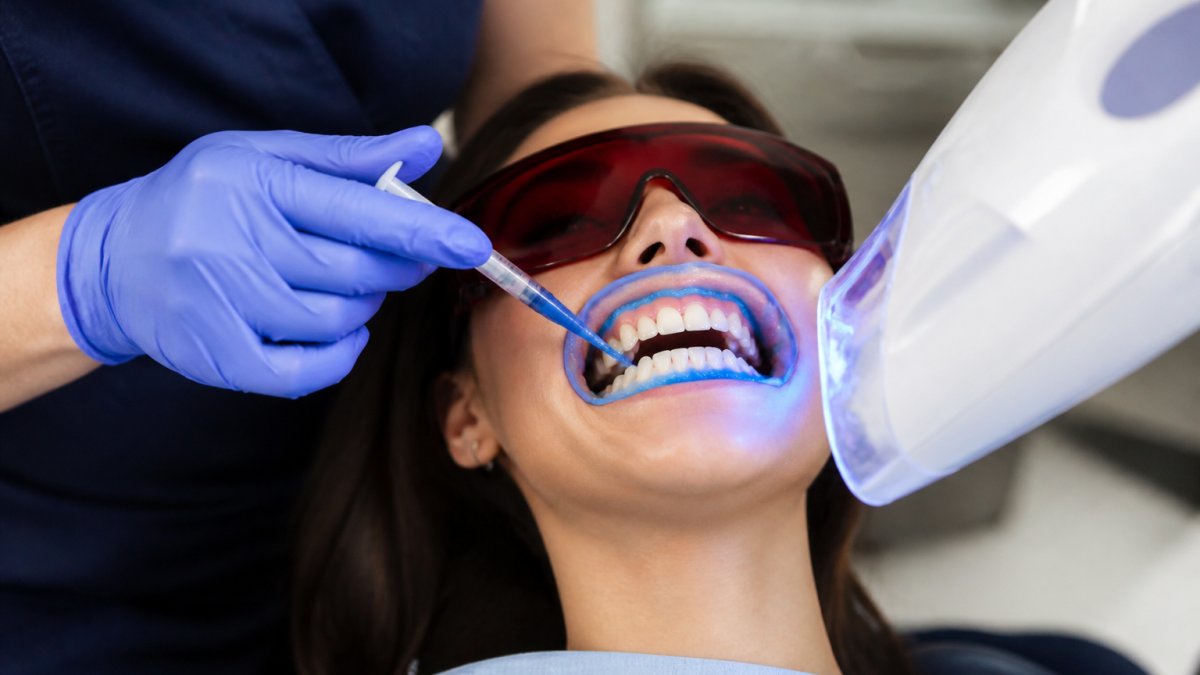
The treatment typically takes 60-90 minutes for a complete in-office session. Results appear gradually as the whitening process continues. Most patients see noticeable results after one appointment, though some choose multiple sessions for maximum shade improvement.
Comparing professional whitening, custom-tray systems, and over-the-counter options reveals important trade-offs for people with sensitive teeth. Professional in-office treatment requires a dental appointment. Custom-tray whitening from your dentist provides a middle ground. Over-the-counter whitening strips and trays are the most affordable and convenient.
For sensitive teeth specifically, the comparison shifts significantly. Professional whitening allows your dentist to apply desensitizing treatments before and after bleaching, reducing stinging pain and discomfort. Custom trays made by your dentist fit precisely, preventing gel from contacting sensitive gum tissue. Store-bought whitening strips often slip or irritate gums because they're one-size-fits-all, making them riskier for people with existing sensitivity.
| Whitening Method | Treatment Strength | Results Timeline | Gum Protection | Best For Sensitive Teeth |
|---|---|---|---|---|
| Professional in-office | Highest concentration | 1-2 weeks visible | Excellent (applied by dentist) | Yes, with pre-treatment |
| Custom-tray at-home | Medium concentration | 2-4 weeks visible | Good (custom fit) | Moderate sensitivity |
| Store-bought strips | Low concentration | 4-8 weeks visible | Poor (generic fit) | Mild sensitivity only |
| Store-bought trays | Low concentration | 3-6 weeks visible | Fair (loose fit) | Mild sensitivity only |
Professional teeth whitening for sensitive teeth stands out because your dentist can evaluate your specific sensitivity causes before treatment. If your sensitivity stems from gum recession, exposed root surfaces, or worn enamel, your dentist may recommend delaying whitening or using additional protective measures. This assessment isn't possible with at-home systems.
Custom-tray systems offer a reasonable compromise if you prefer gradual whitening at home with professional oversight. Store-bought options work best for people with minimal sensitivity and realistic expectations about shade improvement.
Tooth sensitivity during professional whitening occurs because the bleaching gel temporarily affects your tooth structure. Whitening agents penetrate the enamel to reach stain molecules deeper in the tooth, and this process can irritate the nerve inside your tooth. The stinging pain or discomfort typically happens during treatment or within 24-48 hours afterward.
Not everyone experiences sensitivity after whitening. Factors affecting sensitivity include your baseline enamel thickness, existing gum recession, and whether you have untreated cavities or cracked teeth. People with thin enamel, exposed root surfaces, or previous sensitivity to temperature are at higher risk for whitening-related discomfort.
The sensitivity mechanism is straightforward: the whitening gel causes fluid movement inside the tooth, which stimulates nerve endings. This is a normal response to bleaching, not a sign of damage. Most sensitivity resolves within 24-72 hours as your tooth structure stabilizes. However, if sensitivity persists beyond a few days or feels severe, contact your dentist to rule out underlying dental problems.
Professional whitening under dental supervision is safer than at-home methods because your dentist can stop treatment immediately if you experience excessive discomfort. They can also apply protective coatings or fluoride treatments during the appointment to minimize sensitivity. This immediate intervention reduces the likelihood of prolonged discomfort.
Whitening sensitivity typically resolves within a few days after professional treatment. Most patients report that discomfort peaks in the first 24 hours, then gradually subsides. However, some people experience lingering sensitivity for up to one week, particularly if they have naturally sensitive teeth or thin enamel.
The duration varies based on how your individual teeth respond to bleaching. Factors affecting sensitivity duration include the concentration of whitening gel used, how long the gel remained on your teeth, and your tooth's natural sensitivity baseline.
If your dentist applies desensitizing treatments during your whitening appointment, sensitivity duration often shortens. Fluoride applications and bonding agents protect exposed dentinal tubules, the microscopic channels that transmit sensation from the tooth surface to the nerve. This preventive approach reduces both the intensity and duration of post-whitening discomfort.
Sensitivity that lasts longer than one week warrants a follow-up dental evaluation. Prolonged discomfort could indicate a cracked tooth, cavity, or gum recession that requires treatment. Your dentist can assess whether the sensitivity is a normal whitening side effect or a sign of an underlying dental problem.
Reducing sensitivity after professional whitening involves both immediate aftercare and ongoing prevention. Start by using desensitizing toothpaste for at least one week before your whitening appointment. This toothpaste contains compounds that block sensation pathways to the tooth nerve, building a protective baseline before bleaching.
Immediately after whitening, avoid extreme temperatures. Don't consume very hot or cold foods and beverages for 24-48 hours. Cold water can trigger sensitivity in freshly whitened teeth, while hot beverages may increase discomfort. Stick to room-temperature or lukewarm options instead. (Source: a 2023 report on the dental services market)
Continue using desensitizing toothpaste for at least one week after your appointment. Apply it directly to sensitive areas with your finger or a soft toothbrush to maximize contact with exposed tooth surfaces. Many dentists recommend continuing desensitizing toothpaste use for 2-4 weeks after professional whitening to prevent sensitivity from returning.
Avoid acidic foods and drinks immediately after whitening because acids temporarily soften enamel, making teeth more susceptible to sensitivity. Skip citrus fruits, vinegar-based foods, soda, and wine for at least 24 hours. Acidic exposure combined with fresh whitening can intensify discomfort.
Your dentist may apply fluoride gel or bonding resin during your whitening appointment to seal exposed dentinal tubules. These protective barriers significantly reduce sensitivity duration. If you experience sensitivity after leaving the office, apply a fluoride rinse twice daily for the next week to strengthen enamel and reduce discomfort.
Gentle oral hygiene matters too. Use a soft-bristled toothbrush and avoid aggressive brushing for one week after whitening. Vigorous brushing can irritate sensitive areas and prolong discomfort. Consider switching to an electric toothbrush with a sensitive mode if you have one available.
Whether professional teeth whitening sensitive teeth justifies the cost depends on your expectations, sensitivity severity, and desired results. For sensitive teeth specifically, professional treatment offers advantages that at-home systems cannot match.
The primary value proposition is dental supervision and customization. Your dentist evaluates your sensitivity cause, adjusts treatment strength, and applies protective measures before bleaching begins. This personalized approach minimizes discomfort and reduces the risk of adverse effects. Store-bought whitening strips offer no professional assessment or customization.
If you value long-lasting results, professional treatment provides better value per application.
For people with significant sensitivity, professional whitening may be the only safe option. Dentists can use lower-concentration gels, apply desensitizing agents, or recommend alternative cosmetic procedures if whitening isn't suitable for your tooth condition. This professional guidance prevents wasted money on at-home products that won't work for your situation.
The cost-value equation shifts if you have mild sensitivity and realistic expectations. However, if you've tried at-home whitening without success, or if sensitivity prevents you from using over-the-counter products, professional treatment becomes the practical choice.
Consider your timeline too. If you need results quickly for an event or special occasion, professional treatment offers clear value. If you have months to gradually whiten your teeth, at-home options become more attractive financially.
Certain dental conditions make professional whitening inappropriate or risky. If you have untreated cavities, skip whitening until your dentist repairs them. Whitening gel can enter cavity openings and irritate the tooth nerve, causing severe pain. Cavities must be filled before bleaching begins.
Significant gum recession exposes root surfaces that shouldn't be whitened. Roots lack protective enamel and respond poorly to bleaching agents.
Cracked or chipped teeth are another reason to delay whitening. Cracks allow whitening gel to penetrate deeply into the tooth structure, potentially damaging the nerve. Your dentist will recommend filling or bonding the crack before proceeding with bleaching.
Severe, ongoing sensitivity that isn't related to whitening warrants evaluation. If you experience constant tooth pain or sensitivity to temperature that persists daily, underlying problems like decay, gum disease, or a cracked tooth may be present.
Pregnancy is a time to postpone whitening. While whitening is considered safe for most people, the research on bleaching agents during pregnancy is limited. Most dentists recommend waiting until after pregnancy and breastfeeding to undergo professional whitening.
Certain medications increase sensitivity risk. If you're taking medications that cause dry mouth, or if you've recently completed orthodontic treatment, discuss timing with your dentist. These situations may require additional sensitivity management before whitening is appropriate.
Unrealistic shade expectations signal a need for honest conversation with your dentist. Professional whitening lightens natural teeth but cannot change the color of existing crowns, veneers, or fillings. If your visible teeth include restorations, whitening won't produce uniform color.
Professional teeth whitening for sensitive teeth is achievable when you work with a dentist who understands your specific sensitivity concerns. If you're ready to explore whether professional teeth whitening is right for your sensitive teeth, contact Family & Cosmetic Dental PLLC to schedule a consultation with our compassionate dental team.
Yes, many people with sensitive teeth can safely undergo professional teeth whitening with proper precautions. A dentist can assess your sensitivity level, identify its cause, and adjust the treatment accordingly. They may use lower-concentration whitening gel, apply fluoride or desensitizing treatments beforehand, or recommend a custom tray for at-home use instead. Dental supervision ensures the treatment is tailored to your needs, reducing discomfort and protecting your enamel and gums during the whitening process.
Sensitivity after professional whitening typically lasts a few days, depending on the intensity of treatment and your baseline sensitivity. Using desensitizing toothpaste, avoiding acidic foods and drinks, and following your dentist's aftercare instructions can speed recovery. If sensitivity persists or worsens, contact your dentist to rule out underlying enamel damage or other dental issues.
Professional whitening can be less painful when supervised by a dentist who adjusts treatment for sensitivity. Dentists use protective barriers, lower gel concentrations, and desensitizing agents to minimize discomfort. At-home kits, especially over-the-counter options, lack this customization and may cause more sensitivity because they're not tailored to your tooth structure. Custom-tray systems prescribed by dentists offer a middle ground with less sensitivity risk than some in-office treatments.
Professional whitening uses high-concentration bleaching agents applied under dental supervision with gum protection and enamel safeguards. At-home custom-tray whitening from a dentist uses lower-concentration gel in fitted trays, reducing sensitivity while still delivering results over time. Over-the-counter whitening strips and gels offer convenience but lack customization and professional oversight, making them riskier for sensitive teeth. At-home options require patience and consistent use.


