Why Preventative Dental Care for Children Starts Earlier Than You Think
Preventative dental care for children begins before the first tooth appears. Wiping an infant's gums after feeding establishes a routine that carries into toddlerhood. This guide from Family & Cosmetic Dental PLLC breaks that work into age-specific stages so you know what to do, and when.
Age-Specific Milestones for Your Child's Smile
The CDC's oral health guidance groups pediatric dental care around developmental stages rather than birthdays, because children's teeth arrive on their own schedule.
Age Range
What's Happening
Parent's Focus
0-12 months
First primary teeth erupt
Wipe gums, first dental visit by age one
1-3 years
Most primary teeth come in
Brush with supervision, limit sugary drinks
3-6 years
Spacing opens for permanent teeth
Introduce flossing, consider fluoride varnish
6-12 years
Permanent teeth arrive, sealants apply
Sealants on molars, mouthguards for sports
12+ years
Full permanent dentition
Independence with monitoring
Pro Tip The window for dental sealants is narrow. Sealants work best on molars the moment they fully erupt, before decay has a chance to start in the deep grooves.
The Pediatric Dental Cleaning Schedule Every Parent Should Know
A pediatric dental cleaning schedule follows a simple rhythm: every six months starting at age one. That cadence gives your dentist a chance to catch small problems while they're still small. But the six-month rule is a default, not a law. The American Academy of Pediatric Dentistry frames the recall interval around a child's individual caries risk, which is why two children the same age can leave with different return dates.
Here's how the schedule typically breaks down:
First visit (age 1): Brief exam, cavity risk assessment, coaching on brushing supervision. Many pediatric practices do a lap exam with the child on a parent's lap.
Ages 1-3: Cleaning and exam every six months, fluoride varnish applied at each visit. Varnish is typically applied two to four times a year for children at elevated risk.
Ages 3-6: Add bitewing X-rays if the child tolerates them, flossing instruction, and a check for spacing that could crowd permanent teeth.
Ages 6-12:Sealants on first and second molars, orthodontic screening by age seven, and a conversation about sports mouthguards.
Teens: Continue six-month cleanings, monitor wisdom teeth development, and revisit fluoride needs as independence grows.
What Actually Happens at a Cleaning
A typical pediatric cleaning includes:
A visual exam of teeth, gums, tongue, and palate
Removal of plaque and tartar with hand instruments or a gentle ultrasonic scaler
Polishing with a flavored prophy paste
Flossing between teeth that touch
A fluoride treatment (varnish, foam, or gel)
A short conversation about what the dentist saw and what to work on at home
X-rays are not automatic at every visit. Most practices follow a schedule based on the child's age and risk, using lead aprons and thyroid collars. If your child is anxious, ask whether X-rays can wait until the next visit, the exam and cleaning can still happen.
A Parent's Pre-Visit Checklist
Preparation changes how the appointment goes:
Schedule for the child's best time of day. Morning slots work better for most young children.
Feed a light meal beforehand. Hungry kids melt down faster, but a heavy meal before a cleaning can be uncomfortable.
Skip the bribe. Promising a treat for "being brave" signals that something scary is coming.
Bring a comfort item. A favorite stuffed animal or blanket is welcome at most pediatric offices.
Write down your questions. Fluoride, thumb sucking, pacifier use, and teething are all fair game.
Know your insurance basics. Most plans cover two cleanings and exams per year as preventive care; confirm your specific benefits before the visit.
Pro Tip Ask the front desk to note your child's anxiety level in the chart. Pediatric teams use that note to adjust their approach at the next visit, shorter intervals between steps, more tell-show-do, or a parent in the room.
When to Call Before the Next Scheduled Visit
Call your dentist sooner if you notice:
A white or brown spot on a tooth that wasn't there before
Bleeding gums that don't improve after a week of better brushing
A chipped or knocked-out tooth
Persistent bad breath that doesn't clear with brushing
A tooth that looks darker than its neighbors
Complaints of pain when eating or drinking something cold
Early childhood caries can move fast. A spot a dentist can still reverse with fluoride is a very different problem from a cavity that needs a filling, often a difference of weeks, not months.
Proper Brushing and Flossing Techniques for Kids
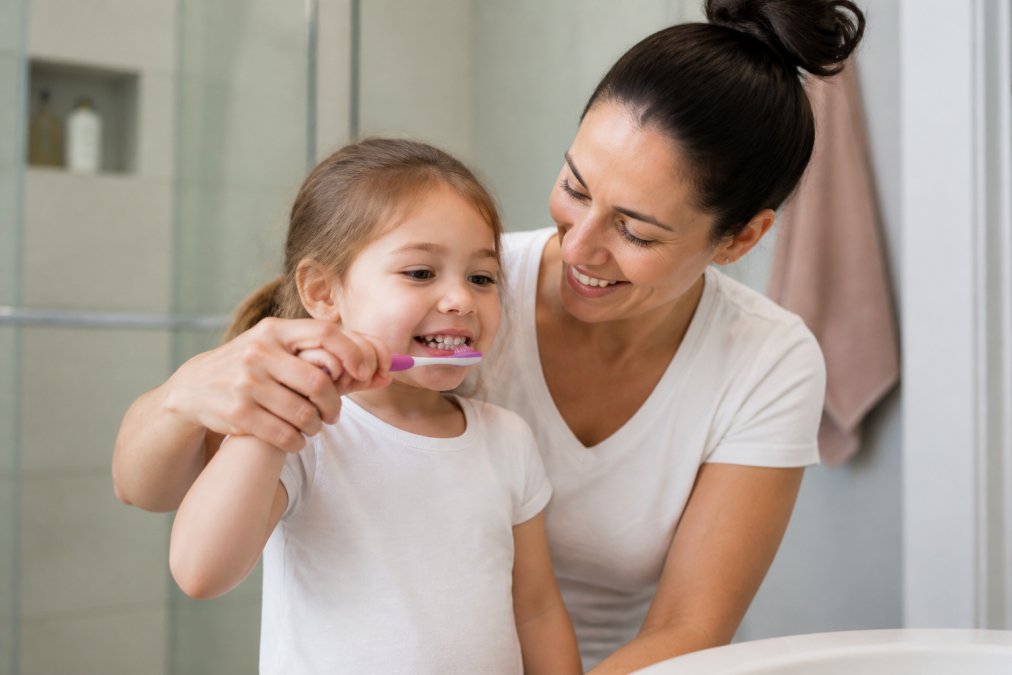
Brushing supervision is the most underrated part of oral hygiene for children. Most kids under eight lack the fine motor control to brush thoroughly, so a parent needs to finish the job or check it afterward.
Parent teaching a young child proper brushing techniques as part of preventative dental care in a bright bathroom.
Watch Out Skipping the back molars is the most common brushing mistake parents make. Those grooves trap food and plaque, and they're the first place decay shows up.
The Benefits of Dental Sealants for Kids
The benefits of dental sealants for kids come down to one thing: they block the grooves where tooth decay starts. A sealant is a thin plastic coating painted onto the chewing surface of molars that hardens into a shield against food and bacteria.
Sealants make the most sense for:
First permanent molars, which erupt around age six
Second permanent molars, which arrive around age twelve
Deep grooves that a toothbrush can't reach
Children with a history of early cavities
Why Do My Gums Bleed When I Brush My Teeth?
Gums that bleed during brushing usually signal plaque buildup along the gumline, called gingivitis. It's common in children and reversible with better brushing and flossing.
Key Takeaway Bleeding gums are a message, not a normal part of brushing. Address the technique first, then see your dentist if it doesn't resolve.
Fluoride, Diet, and Everyday Habits That Protect Young Teeth
Fluoride protects enamel in two ways. Systemic fluoride, from fluoridated water and supplements, strengthens teeth as they form. Topical fluoride, from toothpaste and professional varnish, hardens the enamel surface against acid attacks. The American Dental Association's guidance on fluoride supports community water fluoridation as a safe, effective way to reduce tooth decay across populations.
The Fluoride Decisions Parents Actually Have to Make
The harder questions are the ones parents search for at 11 p.m.:
How much toothpaste, and when? For children under three, a smear the size of a grain of rice. For ages three to six, a pea-sized amount. Swallowing a little fluoride toothpaste is not a medical emergency at these amounts, but teach spitting from the start.
What if we drink well water? Well water is not fluoridated. Ask your dentist or pediatrician whether a fluoride supplement is appropriate, supplements are typically prescribed only after reviewing all fluoride sources, including bottled water and toothpaste.
What about fluoride-free toothpaste? Some parents choose it out of concern about swallowing. The trade-off is real: fluoride-free toothpaste does not provide the same cavity protection. If you go that route, talk to your dentist about professional fluoride varnish as a substitute.
Is fluoride varnish safe for babies? Yes. Varnish is the standard topical fluoride for young children because it stays on the tooth and limits how much is swallowed.
Reading a Toothpaste Label Without a Chemistry Degree
Parents increasingly want to know what's in the tube. A few ingredients are worth understanding:
Fluoride (sodium fluoride, stannous fluoride, or sodium monofluorophosphate): The active cavity-fighting ingredient. Stannous fluoride also has antibacterial properties but can stain in rare cases.
Xylitol: A sugar alcohol that cavity-causing bacteria can't ferment. Often found in children's toothpaste and chewing gum.
Sodium lauryl sulfate (SLS): A foaming agent. Some children with sensitive mouths or canker sores do better with SLS-free formulas.
Artificial dyes and flavors: Not a safety issue at toothpaste amounts, but some families prefer to avoid them. Look for products with the ADA Seal of Acceptance, which confirms the product has met safety and efficacy standards.
Diet: What Matters More Than Sugar
Sugar feeds the bacteria that cause tooth decay, but frequency matters more than total amount. A child who eats one cookie with lunch has very different acid exposure than one who sips juice over two hours. Sticky snacks like gummies and dried fruit cling to teeth longer than chocolate, and juice and soda bathe teeth in sugar with every sip.
Practical habits that help:
Offer water between meals instead of juice
Pair sugary treats with meals, not as standalone snacks
Choose healthy snacks like cheese, nuts, and raw vegetables
Rinse with water after sugary or acidic foods
Watch the sippy cup, prolonged sipping of milk or juice is a common cause of decay on the front teeth
Age-by-Age Fluoride and Diet Notes
Under 1: Breast milk or formula only; no juice. Wipe gums after feeding. Fluoride toothpaste is not needed until the first tooth appears, and then only a rice-grain smear.
1-3: Introduce a cup and phase out the bottle. Offer water between meals. Rice-grain smear of fluoride toothpaste twice daily.
3-6: Pea-sized fluoride toothpaste. Limit juice to 4 ounces a day, if at all. Introduce flossing when teeth touch.
6-12: Supervise brushing until around age eight. Watch sports drinks, which are acidic and sugary. Sealants plus fluoride varnish offer the strongest protection during the years when permanent molars arrive.
Teens: Independence often means skipped brushing. Keep fluoride toothpaste on the counter, keep water in the fridge, and check in on habits without turning it into a fight.
Key Takeaway Fluoride and diet work together. Fluoride hardens the enamel; diet controls how often that enamel is under acid attack. Getting one right and the other wrong leaves a gap that decay will find.
Managing Dental Anxiety and Navigating Costs
Dental anxiety in children is real, and it's often learned from a parent's own fear. The fix starts with the first visit: keep it short, positive, and free of scary language. Pediatric-friendly practices use tell-show-do techniques, explaining each step before doing it.
Best For Families who want preventive care, transparent financial options, and a team experienced with dental anxiety.
Frequently Asked Questions
At what age should a child have their first dental visit?
The American Academy of Pediatric Dentistry recommends scheduling a child's first dental visit by their first birthday or within six months of the first tooth appearing. Early visits let the dentist check dental development, apply fluoride varnish if needed, and coach parents on oral hygiene. These appointments also help children get comfortable with the dental office before any problems develop.
How do dental sealants help prevent tooth decay in children?
Dental sealants are thin coatings painted on the chewing surfaces of back teeth, where grooves trap food and plaque. They block cavity-causing bacteria from settling into those hard-to-brush areas. The benefits of dental sealants for kids are strongest when applied soon after permanent molars erupt, usually around age six and again around age twelve. Sealants can last several years and are checked at routine visits.
Why do my gums bleed when I brush my teeth?
Bleeding gums usually signal plaque buildup along the gumline, which causes early gum inflammation known as gingivitis. It can also happen from brushing too hard or using a worn toothbrush. Switching to a soft-bristled toothbrush, brushing gently at a 45-degree angle, and flossing daily often clears it up. If bleeding continues for more than two weeks, schedule a dental cleaning and exam.
What is the 3-3-3 dental rule for children?
The 3-3-3 rule is a simple habit guide: brush three times a day, for three minutes each time, and visit the dentist every three months. While most dentists recommend check-ups every six months, some children with higher cavity risk may benefit from more frequent visits. Ask your pediatric dentist what schedule fits your child's needs based on their oral health habits.
Is dental anesthesia safe for a young child?
Dental anesthesia is commonly used in pediatric dentistry and is considered safe when administered by a trained professional who adjusts the dose for the child's weight and medical history. Before any procedure, the dentist reviews your child's health history and answers your questions. If your child has dental anxiety, tell the team in advance so they can adjust their approach.
How can I afford preventative dental care for children without insurance?
Many practices accept a variety of PPO insurance plans and offer in-house savings plans or third-party financing for families without coverage. Preventative visits like cleanings and exams typically cost less than restorative treatment, so keeping up with the pediatric dental cleaning schedule often saves money long-term. Call the office to ask about payment options and what your plan covers.
Preventative dental care for children works best when it starts early and stays consistent. If you're due for a check-up or your child hasn't had a first visit, Family & Cosmetic Dental PLLC offers thorough exams, gentle cleanings, and PPO insurance acceptance to make ongoing care simple. Book your experience today and give your child a foundation for lifelong oral health.
With over 30 years of experience, Dr. Adrian Pulkrabek and his team combine science and artistry to prioritize your comfort and oral health. From routine cleanings to complete smile redesigns, we offer state-of-the-art restorative and cosmetic dentistry in a friendly, welcoming environment.
Trustindex verifies that the original source of the review is Google.
Great Dentist!! Office staff, simply put, are just darn good people. Kathleen always greets you with a smile and a friendly welcome. Sarah is the Dental Assistant and Hygienist; she's wonderful, always making sure I feel comfortable and it shows by how she treats a patient (me). All 3 are very professional!! The office is very clean, and the front desk area is organized and well maintained by Kathleen. That being said, Dr. Pulkrabek is an excellent Dentist. Explains every procedure very well, detailed and also making sure I understand and he makes sure I feel comfortable during my visit. One of the great benefits when I'm in the Dental chair and Dr. Pulkrabek is working his magic on my teeth, It's always been practically painless Dentistry. I'm always extremely pleased with the outcome of the Dr's work on my Ivorys!! My overall experience has been outstanding with each visit. I highly recommend making an appointment with Dr. Pulkrabek for your Dental needs and concerns.
Posted on Google
Renee C
Trustindex verifies that the original source of the review is Google.
I have been a patient of Dr. Pulkrabek and his team since probably 2005/2006. I have pretty severe dental anxiety and he is the only reason I’m able to show up for my six month cleanings. He is so gentle, thorough, knowledgeable, and fun. He is efficient. Contemplating a move out of the State and joked that we would probably keep him as our provider and just come back for cleanings. He is that good. Such an amazing dentist.
Posted on Google
Barbara L
Trustindex verifies that the original source of the review is Google.
I have always been pleased with the staff and the doctor. The office manager is professional, and her experience shows as she engages with clients. The doctors assistant is professional, and very pleasant to deal with. The doctor himself, is knowledgeable, professional and always treats me as if I’m his only patient and I have no complaints about my dental care from him.
Posted on Google
Jordynn B
Trustindex verifies that the original source of the review is Google.
Amazing Dentist! Staff was very friendly and I got an appointment very quickly! They gave me a great referral and helped with all my questions and concerns!
Posted on Google
Megan T
Trustindex verifies that the original source of the review is Google.
Amazing dentist! Everyone in the office is amazing and professional. They made me feel at ease and this was the first time going to the dentist. They explain each procedure and how it will benefit your teeth and health.
Posted on Google
Candice H
Trustindex verifies that the original source of the review is Google.
Dr. Pulkrabek and his staff are great. We have been coming here for years and would highly recommend.
Posted on Google
Ahmed M
Trustindex verifies that the original source of the review is Google.
Dr. Adrian was super helpful and explain everything to me! Super easy visit. Extremely friendly staff that helped me with all the insurance and billing!
Posted on Google
Julian M
Trustindex verifies that the original source of the review is Google.
Dr. Pulkrabek is a great dentist, and he does a very good job cleaning and examining teeth. He found a cavity growing underneath a prior filling after taking a closer look. The office staff and dental hygienists are all friendly and professional. I am looking forward to my next visit.
Posted on Google
Natasha L
Trustindex verifies that the original source of the review is Google.
Great office! Everyone is super helpful and does a great job