
Family & Cosmetic Dental PLLC
- Home
- Our Practice
- Services
- Patient Information
- Blog
- Contact Us
Last Updated: October 7, 2026
The short answer: most patients find that is it painful to get a dental crown is not the case, thanks to local anesthesia. Knowing what to expect eases anxiety.
At Family & Cosmetic Dental PLLC, we prioritize a positive, stress-free experience.
What many people worry about when considering is it painful to get a dental crown isn't the procedure itself, it's the unknown: Will the numbing wear off? What if I feel pain?
The dental crown procedure typically takes one to two hours and involves several distinct steps.
Before any work begins, your dentist applies a topical numbing gel where the injection will go, making the anesthetic injection much less uncomfortable.
The numbing usually takes effect within five to ten minutes, with a tingling sensation as it spreads. Once fully numb, you shouldn't feel sharp pain, though you may sense pressure and vibration.
The local anesthesia typically lasts two to three hours. If it wears off before your dentist finishes, they can apply more.
After your tooth is numb, your dentist uses a dental drill to remove decay and prepare the tooth for the crown.
Your dentist shapes the tooth into a stable foundation, removing a layer of outer tooth structure. The water spray and air keep the area cool and clear.
Once shaped, your dentist takes impressions or uses a digital scanner so the lab can create a crown that fits perfectly and aligns with your bite.
After tooth preparation, your dentist places a temporary crown, usually acrylic or composite, held with temporary cement, to protect the tooth while your permanent crown is made.
Placing the temporary crown is painless. Your dentist checks your bite to ensure the crown doesn't sit too high, adjusting it before you leave if needed.
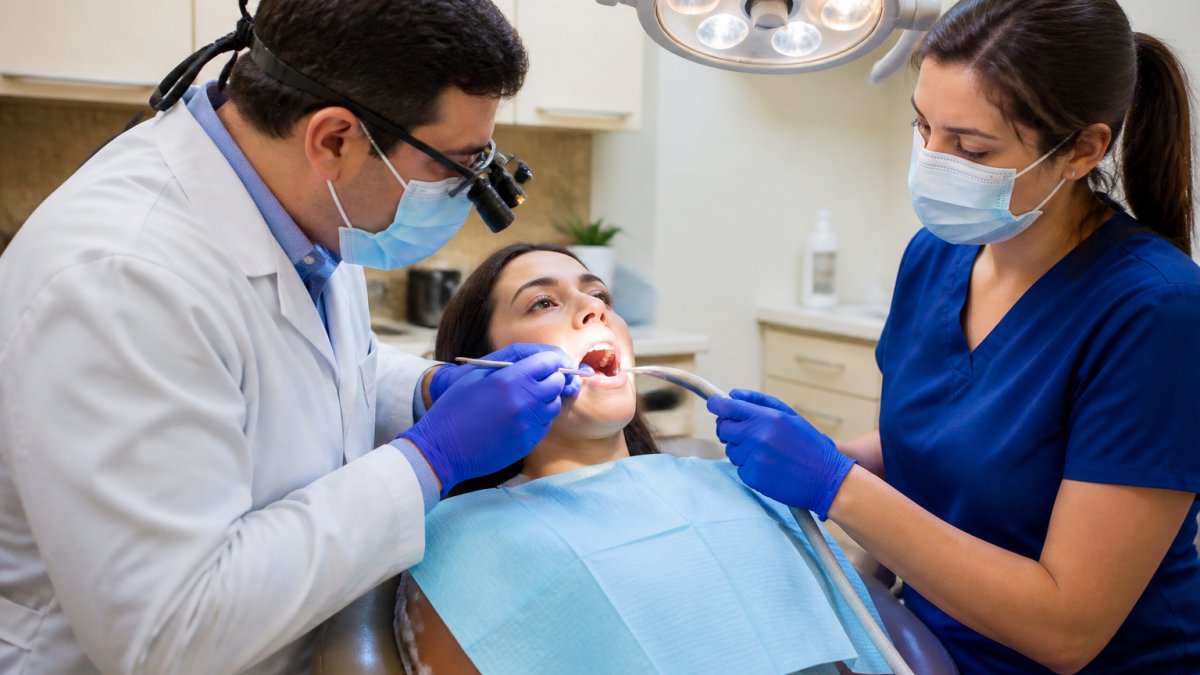
Many patients confuse pressure, vibration, or sound with pain, but they're separate experiences.
Pressure is the most common sensation, gentle but firm pushing or holding, not sharp pain.
Sound from the drill is often louder than patients expect.
Water spray and air keep the area clean and dry during drilling.
Taste of the numbing gel and temporary cement can be unpleasant, but it's harmless and fades quickly.
If you feel sharp pain, not pressure, vibration, or discomfort, but actual pain, signal your dentist immediately.
Post-procedure discomfort follows a fairly predictable pattern, though the timeline depends on which appointment you're recovering from and the tooth's condition beforehand.
First 24 hours: The local anesthesia wears off two to three hours after you leave.
Days 2 through 3: Gum soreness usually peaks, then eases.
Days 4 through 7: Most patients improve steadily.
Weeks 2 through 4 (while wearing the temporary): Low-level temperature sensitivity can persist until the permanent crown is cemented, since temporary material is thinner and doesn't seal the tooth as completely.
Once the permanent crown is cemented, most patients feel a noticeable drop in sensitivity within a few days, since the crown covers the prepared tooth fully. A common pattern is:
The source of the tooth damage changes what you should expect:
Crown after a root canal: The nerve is gone, so the tooth shouldn't feel hot or cold. Discomfort usually comes from gum tissue or bite pressure on a high crown. Sharp pain is a red flag, call your dentist.
Crown over deep decay: If decay came close to the nerve, the tooth may stay reactive to temperature and pressure longer. Some patients end up needing a root canal later if the nerve doesn't settle.
Crown on a cracked tooth: Cracks can extend below the gum line or into the root. If fully removed during preparation, recovery is routine.
Crown on a heavily worn or previously filled tooth: Less remaining structure means the preparation sits closer to the nerve. Expect a longer sensitivity window.
Same-day crowns (milled in-office from a digital scan) skip the temporary phase entirely, no temporary cement irritation and no two-week window of thin-material sensitivity. Traditional crowns involve two appointments and a temporary, adding a second round of gum irritation when the permanent crown is seated.
Neither method is painless, both require the same numbing and tooth preparation.
If pain persists beyond one week after your permanent crown is placed, or you develop severe throbbing, contact your dentist. Persistent pain can indicate an infection, a bite that needs adjusting, or a problem with the crown itself.
Generic advice to "breathe deeply" and "listen to music" doesn't address the practical accommodations that actually change the experience for patients with dental anxiety, a strong gag reflex, or sensory sensitivities. Here's what you can request and how to ask.
Call or message the office when you schedule, not the morning of. Say plainly: "I have dental anxiety and I'd like to discuss accommodations before my crown appointment." This gives the team time to note your chart, schedule extra time, and assign a provider comfortable with anxious patients.
Specific things to ask about:
Local anesthesia is the default for crown preparation, but it isn't the only option. Ask your dentist which of these they offer:
Topical anesthetic before the injection. A gel applied to the gum first minimizes the needle prick. Standard in most offices, but worth confirming.
Buffered or warmed anesthetic. Buffered local anesthetic reduces the sting of the injection. Ask if it's available.
Oral sedatives. Taken before the appointment (often the night before and again about an hour prior). You'll need a driver.
Intravenous (IV) sedation. Given in-office by a trained provider. You'll be drowsy and may not remember much of the procedure.
General anesthesia. Reserved for complex cases or severe anxiety, often in a hospital or surgical center.
Not every office offers every level.
A gag reflex can make impressions, X-rays, and even the water spray during drilling difficult. Practical strategies:
You are allowed to stop the procedure. If you raise your hand, the provider should pause, remove instruments, and let you sit up. Use that moment to sip water, reset your breathing, or ask for more numbing. A short break rarely adds meaningful time and often makes the rest of the visit easier.
If your anxiety is severe enough that you've avoided dental care for years, say so. Many offices have experience with patients returning after long gaps and can pace treatment, including crown work, to rebuild trust.
Most patients recover smoothly, but certain symptoms warrant a call to your dentist.
Contact your dentist if you experience:
Mild discomfort is normal. Tenderness, slight swelling, and temperature sensitivity usually resolve within a few days. Over-the-counter pain relievers like ibuprofen or acetaminophen can help.
Sensitivity that persists after permanent crown placement occasionally happens.
When you call, describe your symptoms clearly: when they started, how severe they are, and what makes them better or worse.
Getting a dental crown doesn't have to mean dealing with pain or discomfort.
Getting a dental crown typically is not painful because dentists use local anesthesia to numb the tooth and surrounding area before beginning the procedure. You may feel pressure, vibration, or hear the dental drill, but these sensations should not be painful. If you experience pain despite the numbing, tell your dentist immediately so they can apply additional anesthesia. Most patients describe the experience as comfortable and manageable.
After temporary crown placement, you may experience mild sensitivity to hot and cold temperatures for a few days as the tooth heals. Your bite may feel slightly high or uneven at first. Avoid chewing sticky or hard foods on the side with the temporary crown. Some tenderness around the gum line is normal. These sensations typically resolve within one to two days. Contact your dentist if you experience severe pain, the crown feels loose, or sensitivity persists beyond a few days.
Several strategies can ease dental anxiety during crown treatment. Discuss your fears with your dentist before the procedure so they understand your concerns and can explain each step. Use a hand signal to pause if you need a break. Practice deep breathing or ask about nitrous oxide (laughing gas) if available. Some patients find it helpful to listen to music or bring a trusted person to the appointment. Family & Cosmetic Dental PLLC specializes in compassionate care for anxious patients and can work with you to create a comfortable experience.
Most patients experience only mild discomfort or sensitivity for one to two days after crown placement. Pain or sensitivity that lasts more than a few days may indicate an issue with bite alignment, nerve irritation, or gum irritation. Over-the-counter pain medication can help manage any tenderness. If you have persistent pain, a high bite feeling, or sensitivity to pressure when chewing, contact your dentist for a bite adjustment or evaluation. Proper aftercare and avoiding hard foods on the crowned tooth speeds recovery.


