
Family & Cosmetic Dental PLLC
- Home
- Our Practice
- Services
- Patient Information
- Blog
- Contact Us
Last Updated: October 30, 2026
Quick Summary
Whether is hydrogen peroxide safe for tooth enamel depends on concentration, exposure time, and frequency: labeled over-the-counter products used as directed are unlikely to cause lasting enamel damage in healthy mouths, while higher concentrations and longer contact times carry measurable risk to enamel microhardness. The label percentage and labeled wear time are the two numbers that decide how much peroxide your enamel receives.
Hydrogen peroxide is a bleaching agent used in most whitening products, and the question of is hydrogen peroxide safe for tooth enamel depends on concentration, exposure time, and how often you use it.
A 2005 PubMed-indexed study of overnight-tray products at 3.5%, 7.0%, and 12.0% hydrogen peroxide concluded these levels were not expected to adversely affect enamel or pulpal enzymes (overnight whitening formula study).
Both findings can be true. That is the part most whitening guides skip.
Studies differ in product type, peroxide concentration, exposure time, and how they measure enamel. Some test trays worn overnight. Others test strips worn for minutes. Some measure microhardness; others look at surface morphology.
So the evidence points to a trade-off, not a clean yes or no. Hydrogen peroxide whitens best. It also carries the most measurable enamel risk.
Hydrogen peroxide whitening works by moving through the tooth structure and breaking apart the pigment molecules that cause discoloration. Peroxide is a small molecule. It passes through enamel into dentine, where most stains sit, and oxidizes them into smaller, lighter compounds.
Here is the short version of the process:
The bleaching agent does not discriminate between stain and tooth structure. That is why concentration and contact time matter so much. More peroxide means more stain removal and more exposure to enamel and oral tissues.
Safety is decided by the dose, not the ingredient. Low-concentration peroxide used briefly behaves very differently from high-concentration peroxide left on for hours. The single most useful thing you can do before buying any whitening product is to find the peroxide percentage on the label and compare it to the wear time the label allows.
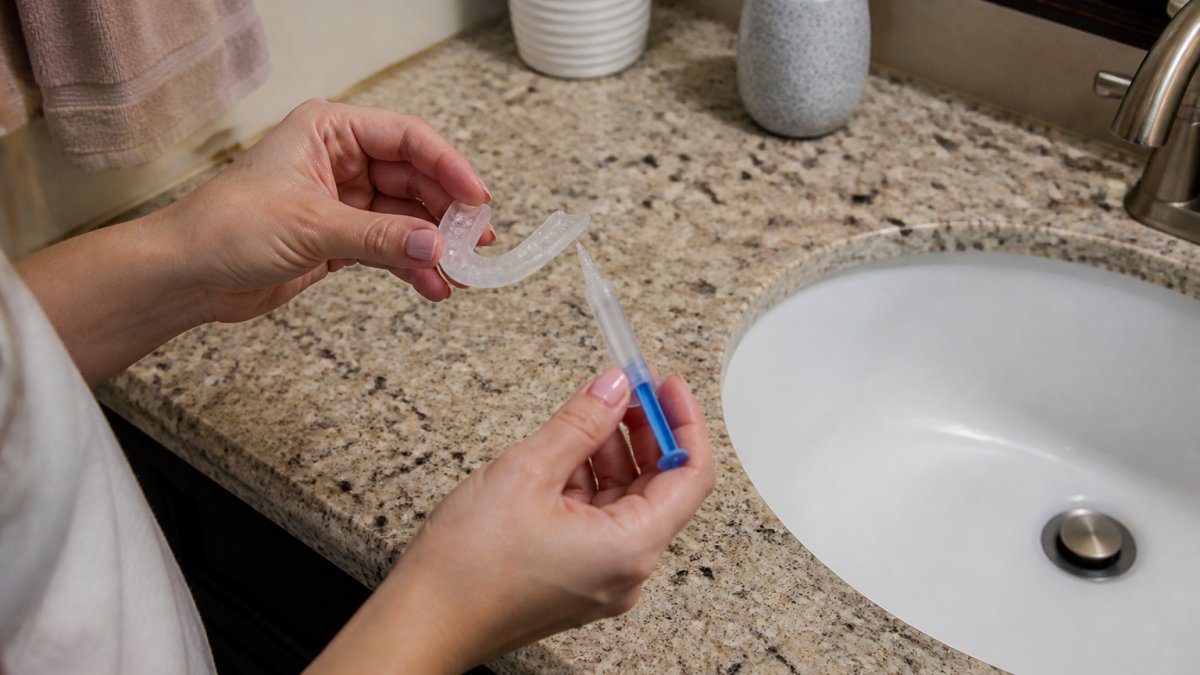
Over-the-counter oral-care products vary in peroxide concentration, and the label percentage is the best guide to the product's strength:
Household peroxide is a different product category entirely. A brown bottle from the drugstore is typically 3% hydrogen peroxide, but it is not formulated, tested, or labeled for prolonged contact with teeth and gums. Do not substitute it for an oral-care whitening product.
Concentration alone does not determine risk. Exposure time, how the product is contained (strip vs. tray vs. paint-on), and how well the gel is kept off the gums all change the dose your enamel actually receives.
A 2005 PubMed-indexed study of overnight-tray products at 3.5%, 7.0%, and 12.0% hydrogen peroxide concluded these levels were not expected to adversely affect enamel or pulpal enzymes under those conditions (overnight whitening formula study).
Use this checklist before and during any peroxide whitening routine:
The research supports a qualified conclusion on is hydrogen peroxide safe for tooth enamel: labeled over-the-counter products used as directed are unlikely to cause lasting enamel damage in healthy mouths, while higher concentrations, longer contact times, and repeated cycles without rest carry measurable risk to enamel microhardness and surface structure.
The label percentage and the labeled wear time are the two numbers that decide how much peroxide your enamel actually receives.
| Product type | Peroxide level | How it is used |
|---|---|---|
| Lower-concentration strips and gels | Drugstore whitening products | Follow the wear time printed on the label |
| Higher-concentration take-home gels | Dispensed by a dental professional | Custom trays with a specific wear schedule |
| In-office professional gels | Applied by a clinician | Gum protection; not for unsupervised home use |
| Household peroxide | Typically 3% hydrogen peroxide | Not formulated or labeled for prolonged tooth and gum contact |
| Overnight-tray study products | 3.5%, 7.0%, and 12.0% | Custom-fit trays with a controlled wear schedule |
Tooth sensitivity is a commonly reported side effect of whitening, and it is often temporary (Incidence of tooth sensitivity after home whitening treatment).
Other effects can also occur.
Watch out: gum irritation and inflammation happen when gel sits on soft tissue instead of the tooth. Ill-fitting trays are a common cause.
If you have sensitive teeth and still want a brighter smile, talk with a dentist about how the approach can be adjusted.
Hydrogen peroxide and baking soda for teeth is a popular DIY combination, and it is not risk-free. Baking soda is abrasive. Peroxide is an oxidizing bleach. Together, mixed at home with no measured concentration, you cannot know your exposure.
A typical homemade recipe combines a small amount of 3% household hydrogen peroxide with baking soda to form a paste. The problems start with the peroxide source itself:
Baking soda provides mild abrasion and can help lift surface stains. Hydrogen peroxide provides the bleaching action that lightens deeper stain. Used together in an uncontrolled paste, you get both effects, but also both risks, with no labeled wear time to anchor your routine.
The main problems with DIY mixing:
If you want the stain-lifting effect of baking soda and the whitening effect of peroxide, use them in products made for oral care with labeled concentrations. Whitening toothpastes that contain baking soda are formulated with an abrasivity rating the manufacturer has tested. Whitening strips and gels list their peroxide percentage and a wear time. That combination gives you the same two mechanisms with a dose you can actually read.
Skip the homemade paste if you have existing tooth sensitivity, receding gums, exposed dentine, untreated decay, or restorations. In those situations the uncontrolled concentration and abrasion of a DIY mix are the last thing your enamel needs. For a wider look at gentler options, see our guide to the best ways to whiten teeth safely.
Professional whitening puts a dental professional in charge of concentration, fit, and gum protection. At-home peroxide products put that responsibility on you and the label.
In-office whitening lets a dentist check your enamel and gums first, then choose a strength that fits your teeth.
The real difference comes down to screening. A dentist can spot tooth decay, cracks, or exposed dentine before peroxide touches them.
Some people should not use peroxide whitening without a dental exam first. Skip it, or get cleared first, if you have:
If you notice gum irritation, inflammation, or sensitivity that lingers, stop using the product. Rinse with water, skip acidic foods for a day or two, and call your dentist if symptoms persist beyond a few days.
A common mistake is pushing through sensitivity to finish a kit. That is how minor irritation turns into a longer recovery.
The safest path to a whiter smile starts with knowing what your enamel can handle. Our team can review your enamel, gums, and goals before recommending any whitening product.
We keep care conservative and comfortable, with flexible payment options, a range of accepted PPO insurance plans, and an in-house savings plan.
Get started with Family & Cosmetic Dental PLLC and brighten your smile without guessing about your enamel. Book your experience today.
Research findings differ by product and conditions. Concentration, exposure time, and frequency of use all matter, so follow product directions and ask a dental professional before starting.
Mixing hydrogen peroxide and baking soda is a common at-home whitening recipe, but the combination is abrasive and the peroxide concentration is uncontrolled. Baking soda can help with stain removal through mild abrasion, yet scrubbing it against enamel repeatedly may contribute to wear, especially alongside an acid-heavy diet. There is no verified research in the supplied data supporting a specific safe ratio or schedule for this mixture. If you want to try it, keep it occasional, use a soft brush, and confirm with your dentist that your enamel and gums can handle it.
Use over-the-counter products and follow the label exactly: the stated concentration, the stated wear time, and the stated frequency. Do not leave trays in longer than directed, do not swallow the gel, and rinse after use. Tooth sensitivity and soft-tissue irritation are reported side effects, so stop and call a dental professional if you notice sharp pain, white spots on gums, or lasting sensitivity.
In-office professional teeth whitening uses higher-concentration bleaching agents, but a dental professional applies them with gum protection, controls exposure time, and checks your enamel, restorations, and gum health first. That supervision is the difference. At-home peroxide products can be appropriate for many people, but a professional can tell you whether existing decay, cracks, or gum inflammation make whitening a poor choice for you and can recommend the lowest effective concentration for your situation.


