
Family & Cosmetic Dental PLLC
- Home
- Our Practice
- Services
- Patient Information
- Blog
- Contact Us
Last Updated: October 31, 2026
Quick Summary
Dental tourism can be a safe option, but only when you treat the trip like a medical decision, not a vacation deal. Dental care abroad carries real risks, including substandard infection control, credential gaps, language barriers, and complications that are hard to manage after you fly home. Vet any overseas clinic against licensing, accreditation, sterilization, written treatment plans, and follow-up policies before you book.
Dental tourism is the practice of traveling outside the United States for dental treatment, usually to pay less than you would at home (Global Tourist Guide to Oral Care - A Systematic Review). According to CareQuest Institute for Oral Health's report on adults traveling for dental treatment, roughly 4% of U.S. adults, nearly 9.6 million people, have traveled abroad for dental care, most often to find lower-cost treatment.
So is dental tourism a safe option? It can be, but only when you treat the trip like a medical decision, not a vacation deal.
Dental care abroad carries risks that patients should understand before they decide. Below, we outline the key risks, the cost considerations, and a vetting checklist you can use before you book anything.
The main challenge is that it can be difficult to tell which overseas clinics meet high standards. A National Center for Biotechnology Information case study on dental surgery abroad notes that dental tourism can involve treatment with life-changing consequences, even when the procedure itself isn't life-threatening.
Licensing rules vary widely from one country to the next, and infection control standards may differ from what you would expect from a licensed U.S. dentist. Ask directly about:
Complications are the quiet cost of dental care abroad. Implants can fail. Crowns can need adjustment. Root canals can flare up weeks later. If that happens after you fly home, your local dentist is starting from scratch, often without your patient records or diagnostic imaging.
Language barriers make informed consent harder too. If you don't fully understand the treatment plan, you can't truly agree to it.
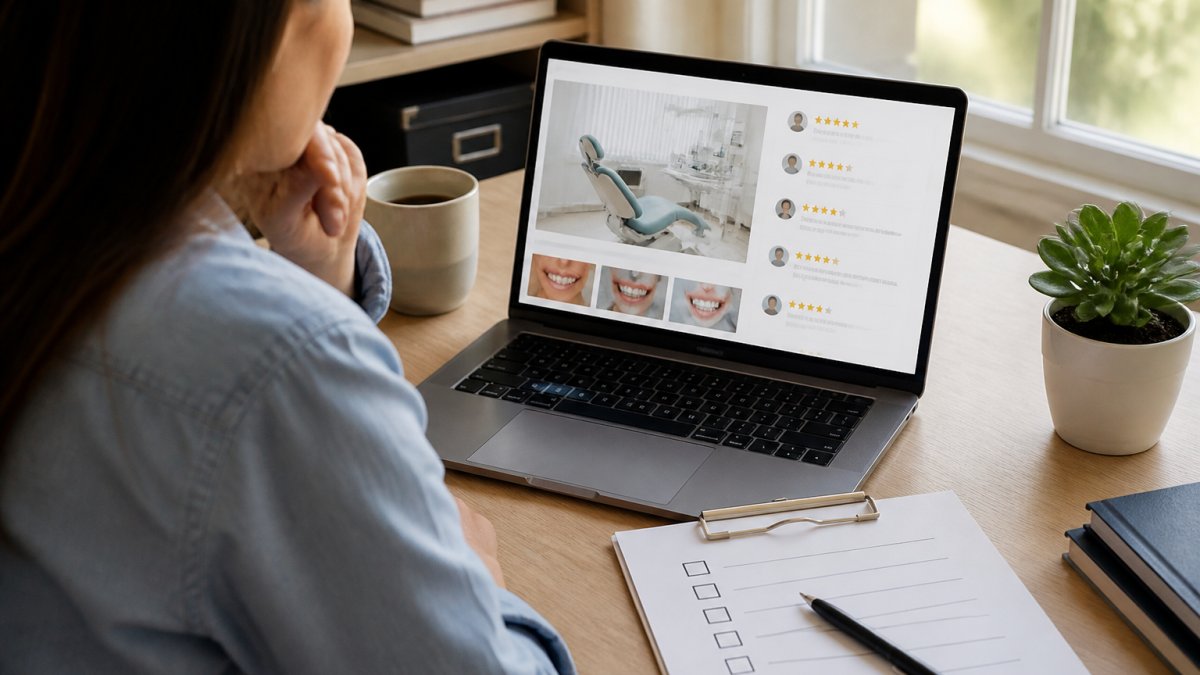
Use this checklist as a verification framework to evaluate what you find about a clinic. For each item, the right-hand column tells you what a credible answer looks like and what should make you walk away.
Ask for the dentist's full name, license number, the issuing authority, and the year of initial licensure. Then verify it independently through that authority's public register, not through a PDF the clinic emails you. For procedures like implants, root canals, or orthodontics, ask whether the dentist holds formal postgraduate training in that specialty or is a general dentist who performs it.
Accreditation is not one thing. Ask which body accredited the facility, what standards it enforces, and when the last inspection was. Ask which body accredited the facility and what standards it enforces, and treat an inability to answer as a gap in verification.
Request the written protocol, not a verbal assurance. A clinic should be able to describe how instruments are cleaned and monitored, and how single-use items are handled. Ask who is responsible for sterilization logs and whether those logs are available for review. Vague answers about "hospital-grade sterilization" are a warning sign.
Ask for a written plan that names the specific materials and brands, implant system, crown material, bonding agents, and the number of visits required. Material quality varies widely, and a plan that says "porcelain crown" without a brand or lab is not specific enough to compare. A written plan also protects you if the treatment changes mid-course.
Ask in writing: Who is responsible if the implant fails in six months? What is the warranty period, and does it cover the lab fee, the dentist's fee, or both? Will the clinic coordinate with a U.S. dentist for follow-up, and will it share records? A clinic that promises "lifetime warranty" without a written policy is offering marketing, not recourse.
Confirm before treatment that you will receive copies of all radiographs, CBCT scans, treatment notes, material lot numbers, and prescriptions in a format a U.S. dentist can read (DICOM for imaging). Without these, your local dentist is guessing, and corrective care becomes more invasive and more expensive.
Read reviews on multiple platforms, and look for patterns rather than single complaints. Recurring themes, pressure to prepay, changing quotes on arrival, rushed consent, no post-op contact, matter more than one angry review. Be skeptical of a wall of five-star reviews posted in a short window.
If a clinic dodges any of these questions, or answers them only verbally, treat that as a decision, not a delay.
Do not compare countries; compare providers. A clinic in a country with weaker overall regulation can still meet high standards, and a clinic in a well-regulated country can still cut corners. Score each candidate clinic on the seven items above using the same criteria, and keep the written answers. That gives you a defensible basis for a decision, and a paper trail if something goes wrong.
The savings are real, but the sticker price isn't the whole bill. Add flights, hotel, meals, time off work, and a companion if you're traveling for surgery. Then add the scenario nobody budgets for: a complication that needs corrective treatment back home.
That second bill often wipes out the discount. If you're weighing this math, our guide to managing dental costs without insurance and our walkthrough on how to use HSA funds for dental work show what affordable care can look like closer to home.
Recovery time depends on the procedure. Your dentist should confirm your own timeline based on your health history and the specifics of the treatment.
| Procedure | Typical recovery | Minimum time near the clinic before flying | Key follow-up need |
|---|---|---|---|
| Cleaning, exam | Same day | None | Routine; can be done locally |
| Filling | 1-3 days | 1-2 days | Bite check; replacement if it fails |
| Crown | 3-7 days | Until cementation is complete and bite is checked | Fit check; recementation if it loosens |
| Root canal | 3-7 days | 2-3 days | Confirmation of healing; retreatment if pain persists |
| Single implant | 1-2 weeks | 7-10 days, or until sutures are removed and initial healing is confirmed | Osseointegration check at 3-6 months; local dentist can monitor |
| Multiple implants or bone graft | 2-4 weeks | 10-14 days | Staged healing; higher risk of swelling and infection |
| Multiple extractions | 1-2 weeks | 5-7 days | Bleeding control; dry socket risk |
A cleaning has no healing phase, so you can fly the same day. A crown requires the dentist to seat and adjust it, and a bite that is off by a fraction of a millimeter can cause jaw pain or fracture the crown weeks later, which is why you should not fly home before the crown is cemented and checked.
A practical rule: plan your trip so you are still near the treating dentist for the full early-healing window for your procedure, not just the day of surgery. The cost of a few extra hotel nights is small compared with the cost of a complication handled remotely.
Before you leave the clinic, ask for everything in writing: your treatment plan, materials used, X-rays, and post-op instructions. Informed consent only counts if you understood it. Continuity of care depends on your local dentist being able to pick up where the overseas clinic stopped. Without records, that handoff is guesswork, and corrective treatment gets harder and costlier.
Here's the part most guides skip: the cheapest safe option is often a local one you haven't priced yet. Our practice accepts a wide variety of PPO insurance plans and offers flexible payment options and an in-house savings plan.
If cost is your reason for looking abroad, start with how to find affordable dental care before you compare flights. You may find the gap is smaller than you think.
A second opinion costs far less than a failed implant. Family & Cosmetic Dental PLLC provides conservative, compassionate care, and offers flexible financial options. Not sure whether emergency work is worth it? Read is emergency dental work worth the cost, then learn how to choose a local dentist you can trust.
It can be, but safety depends almost entirely on the clinic you choose. Safety depends largely on the specific provider, so the question is whether a particular clinic meets the standards you would expect at home. Verify licensing, ask about sterilization protocols, and get a written treatment plan before you commit.
The biggest dental tourism risks include substandard care, weak infection control, communication problems, and no easy path to follow-up or corrective treatment once you are back in the U.S. Common concerns include complications, language barriers, varying standards, and the difficulty of follow-up care once you are home.
Start by asking the clinic for the treating dentist's license number, the licensing body that issued it, and the clinic's accreditation status. Cross-check those details against the regulator's public register where one exists, and ask for the dentist's training history and how many procedures like yours they perform each month. Request before-and-after photos of real cases and ask for patient references you can contact. A dental tourism safety checklist should include written answers to all of these before you pay a deposit.
Sometimes, but the headline price is not the full cost of dental tourism. Add airfare, lodging, meals, time off work, and the cost of any follow-up or corrective treatment once you are home. Before booking, compare the total trip cost against what your PPO insurance, an in-house savings plan, or third-party financing would cover locally.
Dental tourism can be safe, but only with real diligence and a plan for what happens after you fly home. Before you book, get a local second opinion. Family & Cosmetic Dental PLLC offers thorough exams, clear treatment plans, PPO insurance acceptance, and flexible payment options to help you decide with confidence. Get started with Family & Cosmetic Dental PLLC and book your experience today.


