
Family & Cosmetic Dental PLLC
- Home
- Our Practice
- Services
- Patient Information
- Blog
- Contact Us
Last Updated: October 12, 2026
Learning how to care for [dental bridges](/services/restorative-dentistry/full-dentures/) at home starts with brushing twice daily and flossing around the structure. A bridge anchors to the natural teeth on either side, called abutment teeth, and both need protection.
Use a soft-bristled toothbrush morning and evening; hard bristles damage gums and scratch the bridge. Brush for two minutes, focusing along the gum line where plaque builds up (the American Dental Association).
Pay special attention where the bridge meets your natural teeth, where bacteria collect and decay starts. Angle your brush 45 degrees toward the gum line and use gentle, circular motions.
Fluoride toothpaste strengthens natural teeth and helps prevent decay around the abutment teeth. Apply a pea-sized amount and brush all surfaces: front, back, and chewing surfaces.
Avoid aggressive scrubbing; gentle pressure is more effective and protects gums from recession and sensitivity.
After brushing, let the toothpaste sit for 30 seconds before rinsing so fluoride has more time to work.
Flossing under a dental bridge differs from flossing natural teeth. The false tooth (pontic) sits on top of your gum, and you must clean underneath it where food and bacteria hide.
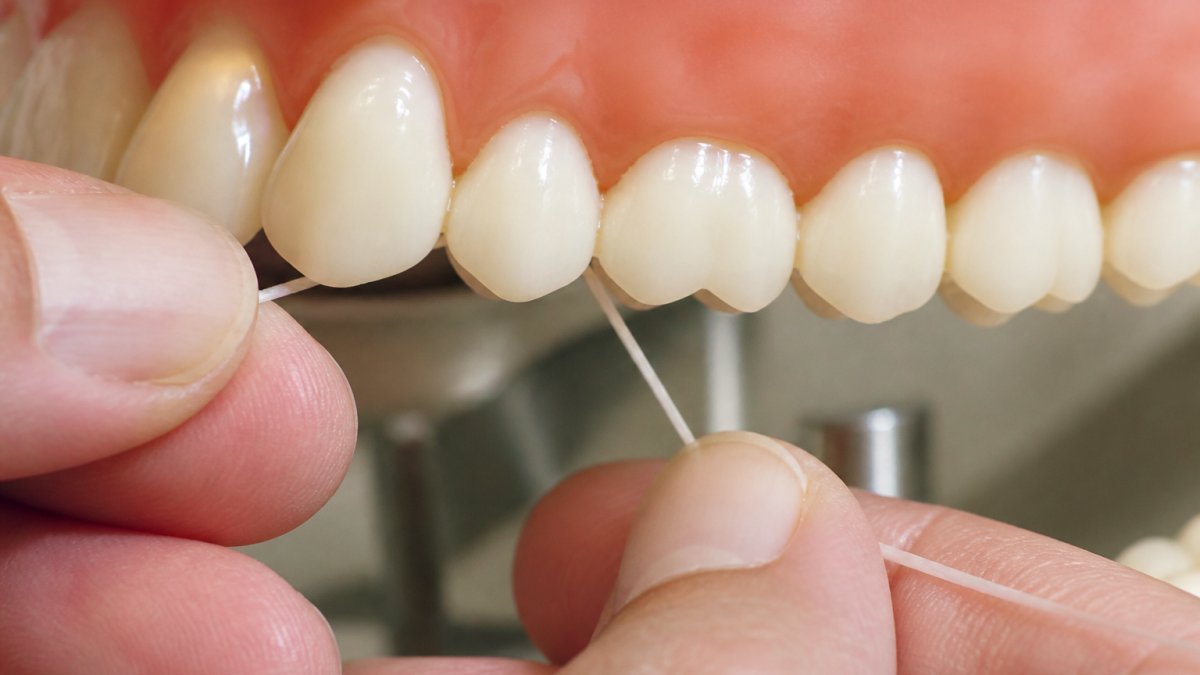
Start with about 18 inches of floss and thread one end under the bridge from the cheek side, getting it underneath the pontic rather than around it.
Use these steps:
Once positioned, move the floss back and forth gently to scrub away plaque and debris.
After cleaning under the bridge, focus on the margins where it meets your natural teeth, which trap plaque and bacteria.
Wrap the floss around one abutment tooth in a C-shape, slide it between tooth and bridge, and move it up and down gently several times.
The bridge margins are critical because decay there can weaken the supporting teeth, so clean them daily.
Floss alone isn't always enough under a bridge; the right tool depends on the gap beneath your pontic, your abutment shape, and your dexterity. Ask your dental office for samples before buying in bulk.
A floss threader is a small plastic loop with a stiff, pointed tail.
To use super floss on a traditional bridge:
For a Maryland bridge (resin-bonded bridge), the pontic is held by metal or ceramic wings bonded to the back of adjacent teeth rather than full crowns.
For a cantilever bridge, supported on only one side, the unsupported end often has a small gap reachable with a threader or narrow interdental brush.
For an implant-supported bridge, the cleaning space is between the bridge and the gum around each implant, not between natural teeth.
An interdental brush is a tiny bottle brush on a thin wire or plastic handle, color-coded by size.
Use short back-and-forth strokes, two or three passes per space, rinsing between spaces.
A water flosser shoots a pulsating stream that rinses debris from under the pontic and along the gum line, especially useful with arthritis, braces, or a hard-to-thread bridge.
Water flossers do not replace floss or interdental brushes for removing adhered plaque.
Bring your tools to your next dental visit and ask your hygienist to check your technique; a two-minute demonstration often catches problems written instructions miss.
What you eat affects how long your bridge lasts. Certain foods can damage or loosen it or cause decay in the supporting teeth.
Sticky foods pull on the bridge and can dislodge it. Avoid:
Hard foods can crack the bridge or break the cement holding it in place. Stay away from:
Very hot foods and drinks can weaken the cement over time, so let hot coffee or soup cool first.
Chew on the opposite side when possible. If your bridge is on the left, chew on the right to reduce pressure on the bridge and supporting teeth.
A temporary bridge protects your teeth while the permanent one is made, but it is weaker, so extra care is essential.
Temporary bridges use weaker adhesive so they can be removed easily, making them more likely to come loose.
If your temporary bridge comes loose, call your dentist right away.
Increased sensitivity in the abutment teeth during the temporary phase is normal and usually decreases once the permanent bridge is in place.
Most bridge problems start small and worsen if ignored; the difference between a quick repair and a replacement often comes down to how fast you act. Use the guidance below to sort symptoms into three buckets: handle at home, call the office soon, and seek care right away.
A loose bridge moves, clicks, or shifts when you chew or run your tongue along it, usually because the cement weakened, the abutment tooth changed shape, or the bridge was never fully seated. Call your dentist the same day. Meanwhile:
Sensitivity around the bridge or supporting teeth is common in the first few days and should fade over one to two weeks.
Bleeding gums around the bridge usually means plaque buildup and inflammation. Step up flossing and interdental brushing for seven to ten days. If bleeding continues after a week of careful cleaning, or gums are swollen, tender, or receding, schedule a checkup, since persistent bleeding can signal a margin that no longer fits.
Decay around the abutment teeth is serious because it weakens the teeth holding the bridge. Watch for:
Decay cannot be fixed at home. Your dentist must remove it, and depending on how much tooth structure is lost, the bridge may need to be remade.
Bridge damage like cracks, chips, or a broken pontic needs repair, since a damaged bridge won't seal properly and lets bacteria reach the abutment teeth. Call your dentist within a day or two.
When you call, be ready to describe:
Clear answers help the office decide whether you need a same-day visit, a later appointment, or a specialist referral. When in doubt, call: a five-minute conversation beats waiting until a small problem becomes a new bridge.
At-home care is essential, but professional cleanings are equally important.
Schedule dental visits every six months. We recommend regular checkups to monitor your bridge and supporting teeth and catch small problems before they become expensive repairs.
During your visit, tell your dentist about any changes: looseness, sensitivity, or difficulty cleaning.
If you grind your teeth at night, mention this to your dentist. Grinding puts extra pressure on bridges and supporting teeth.
Caring for your dental bridge at home is straightforward: brush twice daily with a soft toothbrush, floss daily using a threader or super floss, and avoid sticky and hard foods. At Family & Cosmetic Dental PLLC, we're here to help you maintain your bridge and keep your smile healthy for years to come. The American Dental Association's guide to bridge care provides additional resources on how to care for dental bridges at home.
Clean your dental bridge daily, just like your natural teeth. Brush twice daily with a soft-bristled toothbrush and fluoride toothpaste. Floss at least once daily, threading floss underneath the pontic (the false tooth part of the bridge) to remove food debris and bacteria. Many dentists recommend flossing after each meal if you eat sticky or hard foods. Regular daily care prevents plaque buildup, protects your supporting teeth, and extends your bridge's lifespan.
Use a floss threader to guide regular dental floss under the bridge, or try super floss, which has a stiff end designed for threading. Gently guide the floss beneath the pontic, then work it back and forth against the underside of the bridge and around the supporting teeth. Clean the bridge margins (where the bridge meets your natural teeth) thoroughly. For stubborn debris, interdental brushes or a water flosser can reach areas floss may miss. Be gentle to avoid irritating your gums.
Avoid sticky foods like caramel, taffy, and chewing gum, which can pull a bridge loose. Hard foods such as nuts, hard candy, popcorn kernels, and ice can crack or damage the bridge. Extremely hot foods and beverages may cause sensitivity around supporting teeth. Crunchy foods like raw carrots or apples should be cut into small pieces. Chew on both sides of your mouth to distribute pressure evenly and reduce stress on the bridge.
Contact your dentist promptly if your bridge feels loose, moves when you chew, or causes persistent pain or sensitivity. A loose bridge can allow bacteria to reach supporting teeth and cause decay. Pain may indicate an improper fit, an underlying cavity, or gum disease. Do not attempt to tighten or adjust the bridge yourself. Your dentist can examine it, make adjustments, or replace it if necessary. Prompt attention prevents complications and protects your supporting teeth.


