
Family & Cosmetic Dental PLLC
- Home
- Our Practice
- Services
- Patient Information
- Blog
- Contact Us
Last Updated: September 24, 2026
Fear of the dentist keeps millions of adults out of the chair every year. If you're searching for a Glendale Family Dentistry alternative for anxiety, you're not alone, and you're not being dramatic. Dental phobia is one of the most common fears people carry into adulthood.
At Family & Cosmetic Dental PLLC, we hear the same story again and again: a bad experience years ago, a long gap without care, and now a mix of embarrassment and dread. The good news is that modern dental anxiety treatment has changed. There are real options now.
This guide breaks down what actually works.
Overcoming dental fear starts with small, controlled steps, not willpower. Many patients find that naming the fear and building a plan with their dentist reduces anxiety before the appointment even begins.
A common approach includes:
Not everyone wants medication. Non-drug options work well for mild to moderate anxiety.
Sedation dentistry uses medication to calm the central nervous system so that fear and the gag reflex stop driving the appointment. The right option depends on your anxiety level, your health history, the length of the procedure, and whether you need to drive yourself home. Here is how the three main tiers actually differ.
| Option | Onset | Duration | Awareness | Drive yourself? |
|---|---|---|---|---|
| Nitrous oxide | 2-3 minutes | Wears off in 5-10 minutes | Fully awake | Yes |
| Oral conscious sedation | ~60 minutes | Several hours | Drowsy, often little memory | No |
| IV sedation | Immediate | Procedure length + recovery | Deeply relaxed, minimal memory | No |
A useful rule of thumb: match the sedation to the fear, not to the procedure. A patient with mild jitters who needs a filling may do fine with nitrous. A patient who has avoided the dentist for a decade and needs a root canal and two crowns will usually be far more comfortable with a deeper level of sedation, even though the work itself is routine.
For most healthy patients, sedation dentistry is safe when a trained dentist monitors you. Safety protocols include continuous monitoring throughout the visit.
You don't need a script, but saying the words out loud helps. Tell your dentist about your dental fear before treatment starts, ideally when you book the appointment.
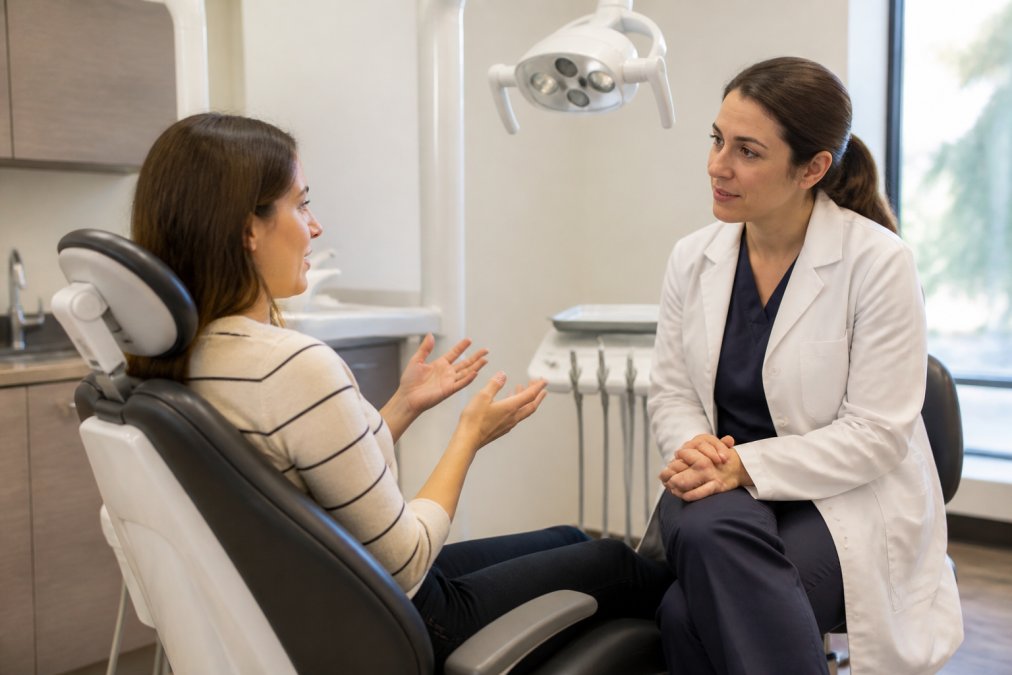
Simple phrases that work:
Your first visit is mostly about getting to know each other. The team reviews your medical history, takes any needed X-rays, and talks through your goals before any treatment plan is made.
Here's how a typical anxiety-friendly first visit flows:
| Stage | What Happens | Why It Helps |
|---|---|---|
| Check-in | Friendly greeting, paperwork review | Lowers pressure before treatment |
| Consultation | Talk through fears and history | Builds trust and a plan |
| Exam | Gentle check, X-rays if needed | No surprises, no rushing |
| Plan | Options explained clearly | You stay in control |
Cost is one of the biggest reasons people avoid the dentist, and it's a fair concern. At Family & Cosmetic Dental PLLC, we accept a wide variety of PPO insurance plans and offer flexible payment options, including third-party financing and an in-house savings plan.
A few things to check before your visit:
Most anxiety about dental work is really anxiety about the hours after, will I feel sick, will it hurt, what if something goes wrong? Here is a realistic timeline so you know what to expect, hour by hour.
A little discomfort is expected. These signs are not, and warrant a call:
Anxious patients do better when the recovery plan is set before the appointment, not improvised afterward. Put these together the night before:
For patients with dental phobia, the psychological comedown matters as much as the physical one. It is common to feel relieved, tearful, or even a little embarrassed after a long-avoided appointment. That reaction is normal and usually fades within a day or two. Many patients find it helps to write down what went well, which signals worked, what the dentist did that calmed them, so the next visit starts from a place of confidence instead of fear.
Start by telling the dental team about your anxiety before your appointment. Many practices, including Family & Cosmetic Dental PLLC, offer stress-free dentistry approaches such as nitrous oxide, oral conscious sedation, or IV sedation. Schedule a consultation first so you can meet the staff without treatment. Bring headphones, practice breathing exercises in the waiting room, and agree on a hand signal to pause. You can also ask for a morning appointment when you are less fatigued. The goal is patient comfort, not rushing through the visit.
Yes. Sedation dentistry options include nitrous oxide (laughing gas), oral conscious sedation (a pill taken before the appointment), and IV sedation for deeper relaxation. Non-medicinal approaches include relaxation techniques, breathing exercises, and simply choosing a patient-friendly practice that explains each step. Family & Cosmetic Dental PLLC focuses on conservative and compassionate care, which means the team adjusts the pace to your comfort level. Always share your medical history so the dentist can recommend the safest option for you.
A stress reduction protocol typically involves a pre-visit consultation to discuss fears, choosing a quiet appointment time, using sedation when appropriate, and monitoring vital signs throughout the procedure. The dentist may also use local anesthesia to ensure pain-free treatment. Communication is key: you agree on signals to pause, and the team explains each step before it happens. This approach helps patients with dental phobia receive necessary care without triggering panic, and it is standard in anxiety-friendly practices.
Yes. Cognitive behavioral techniques, deep breathing, progressive muscle relaxation, and guided imagery can reduce dental anxiety before and during visits. Some patients find that listening to music or a podcast distracts them. Others benefit from bringing a supportive friend or scheduling a meet-and-greet with the dentist first. Practicing relaxation techniques at home before your appointment builds familiarity. For severe dental fear, combining these methods with professional sedation options often works best. Discuss your preferences with your dentist to build a treatment plan that fits.
Dental professionals see patients with a wide range of oral health conditions daily. Shame is a common barrier, but a compassionate practice will focus on your current needs, not judge you. Family & Cosmetic Dental PLLC emphasizes conservative and compassionate care, meaning the team works with you at your pace. You can start with a simple exam and cleaning, then build a treatment plan together. Many patients with severe dental anxiety find that once they communicate their fear, the staff becomes an ally in their oral health maintenance.
Dental anxiety doesn't have to keep you out of the chair forever. Whether you need a routine cleaning or you've been putting off a root canal, Family & Cosmetic Dental PLLC offers conservative, compassionate care with flexible financing and a wide range of accepted PPO plans. Our team is built for patients who've been burned before, and we'll go at your pace. Get started with Family & Cosmetic Dental PLLC and book a visit that finally feels manageable.


