
logo (2)
Family & Cosmetic Dental PLLC

Finding Compassionate Dentists in Glendale: 2026 Guide

Contact Us

Table of Contents

Last Updated: September 12, 2026

What Compassionate Dental Care Actually Looks Like

Compassionate dentists treat the patient's emotional state as seriously as the tooth being treated. It shows up in how a hygienist explains each step, how a dentist pauses when you raise your hand, and how the front desk handles a billing question without making you feel like a burden.

At Family & Cosmetic Dental PLLC, we've learned that compassionate dentists are defined less by ads than by observable behaviors during a visit. "Gentle" and "caring" appear on nearly every practice website, making those words useless as a filter.

What separates a compassionate practice from one that markets itself that way: consent before every instrument, plain-language explanations, and a willingness to stop when you signal discomfort, teachable habits you can spot in a single appointment.
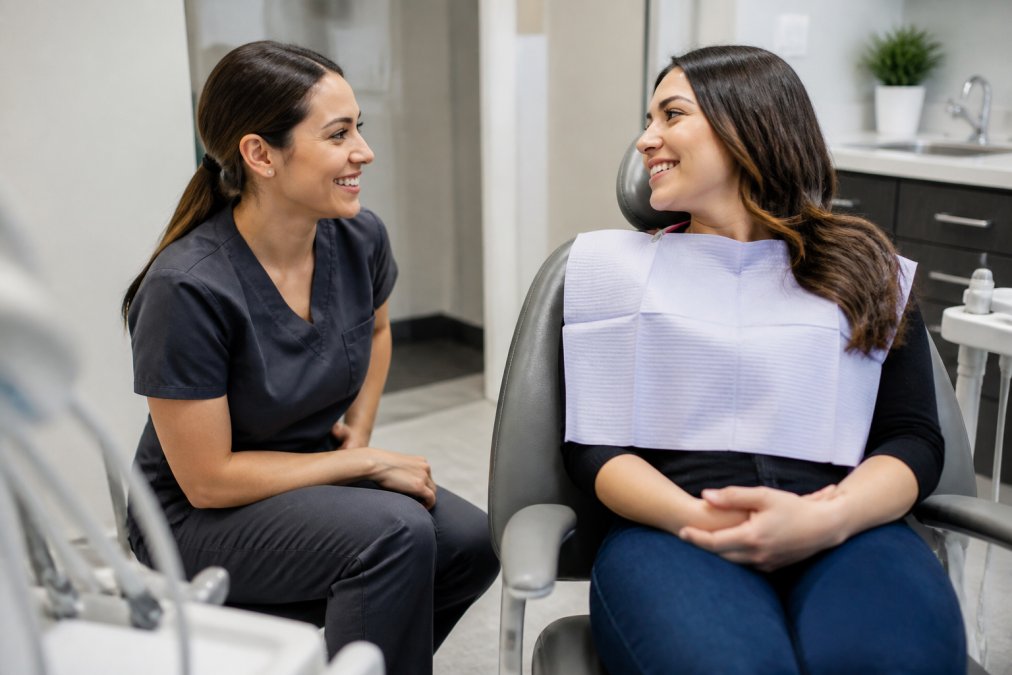
A dental hygienist kneeling beside a seated patient in a bright treatment room, both smiling during a relaxed conversation, with modern dental equipment visible in the background

Compassion Checklist: 7 Signs to Look For

Use this checklist during your next visit or phone call, each item is directly observable.

  • The dentist or hygienist explains what they're doing before starting
  • Staff ask about past negative experiences and adjust accordingly
  • You're told the cost estimate before treatment begins
  • Hand signals are offered so you can pause without speaking
  • The office schedules enough time that nobody rushes you
  • Questions are answered without visible irritation
  • Follow-up happens after a major procedure, not just a bill

If four or more of these are missing, the practice is telling you something.

Questions to Ask a New Dentist Before You Book

The right questions to ask a new dentist fall into three categories: discomfort, money, and your time. Asking before you book saves you from discovering the answers mid-procedure.

Start clinical: how they manage anxious patients, whether they offer sedation, and what happens if you need to stop partway through. Then logistics: scheduling lead times, who handles insurance claims, and financing if your plan falls short.

A common mistake is treating the first visit as transactional. The consultation is your chance to evaluate bedside manner and patient comfort before you're in a position where it's hard to leave. Notice whether the dentist sits down to talk or delivers information standing in the doorway.

Pro Tip
Ask your question by phone before scheduling. How the front desk responds to a nervous new patient on a five-minute call predicts how the whole practice treats you in the chair.

Dental Anxiety Management Techniques That Work

Dental anxiety management works best built into the visit rather than bolted on. The most effective techniques combine communication, pacing, and, when appropriate, medication, and the difference between a practice that manages anxiety well and one that merely claims to is whether those techniques are written into protocols or improvised per patient.

Start with the non-pharmacological layer, which costs nothing and works for most mild to moderate anxiety:

  • A pre-agreed stop signal. Raising a hand, squeezing a stress ball, or tapping the armrest, the clinician stops immediately and checks in, not at the next convenient pause. Ask their stop protocol before you're reclined.
  • Tell-show-do. The clinician names the instrument, shows it, demonstrates it on a finger or model, then uses it. A standard pediatric technique that works on adults and signals real anxiety training.
  • Sensation scripting. "You'll feel cold water and a vibration, not pain" gives your nervous system something accurate to expect. Unpredictable sensation drives dental fear more than pain itself.
  • Pacing control. Splitting a two-hour crown prep into two one-hour visits, or a cleaning and filling on separate days, keeps each appointment inside your tolerance window.
  • Sensory load reduction. Noise-canceling headphones, sunglasses, an unscented room, and a weighted or warmed blanket are low-cost accommodations. Ask whether they're available.
  • Morning scheduling. Anxiety tends to be lower earlier in the day, and offices run closer to on-time before the schedule backs up. A practice that reserves early slots for anxious patients plans around them.

For patients with dental phobia, clinical-level fear that interferes with daily life or keeps you out of the chair for years, the non-pharmacological layer usually isn't enough. That's where clinical options matter, and where a practice offering only "gentle care" as a slogan, without concrete sedation protocols, isn't equipped.

Sedation Dentistry and Other Comfort Options

Sedation dentistry covers a spectrum; the right level depends on your health history, the procedure, your anxiety severity, and prior responses. A dentist should walk you through the trade-offs during a consultation, not on treatment day.

Nitrous oxide (laughing gas). Inhaled through a nosepiece, adjustable minute to minute, and reversed with a few minutes of oxygen. Fast onset and recovery make it the most common option for mild anxiety and short procedures. Most patients can drive themselves afterward, though some practices prefer you arrange a ride. It's generally avoided during pregnancy and with certain breathing conditions.

Oral sedation. A pill taken before the appointment, commonly a benzodiazepine, producing a relaxed, sometimes drowsy state while you remain responsive. Because the effect lasts hours and peaks unpredictably, you'll need a responsible adult to drive you home and stay with you, and you shouldn't work or sign anything important that day. Dosing is adjusted for age, weight, and other medications, so a full medical history review is non-negotiable.

Intravenous (IV) sedation. Delivered and titrated by a trained provider, allowing the deepest conscious sedation and fastest adjustment. Reserved for longer procedures, complex surgical work, severe phobia, or a strong gag reflex. Requires a driver, an escort, and fasting per the practice's instructions.

General anesthesia. Unconsciousness, delivered in an appropriate facility. Used for very young children with extensive needs, patients with significant medical or behavioral considerations, or long multi-procedure sessions. It's the least common option and carries the most requirements.

A few practical points that separate a real sedation program from a marketing line:

  • Medical screening comes first. Sleep apnea, heart conditions, pregnancy, current medications, and alcohol or sedative use all change what's safe. A practice offering sedation without a screening questionnaire is a red flag.
  • Monitoring matters. Even moderate sedation should involve continuous pulse oximetry and blood pressure monitoring, plus a staff member whose only job is watching you (PubMed).
  • Recovery instructions are part of the service. You should leave with written aftercare, a phone number, and clear guidance on when you can drive, work, or operate machinery.
  • Cost and coverage vary. Many plans treat sedation as a separate line item, often uncovered for routine care. Ask for the sedation fee in writing before you consent.
Pro Tip
If you've avoided the dentist for years because of fear, say so on the phone when you book. Ask three questions: Do you offer nitrous? Do you offer oral sedation? What's your stop-signal protocol? The specificity of the answers tells you more than any review.

Renee C., one of our long-term patients, put it plainly: she has "pretty severe dental anxiety," and staying with the same dentist since the mid-2000s keeps her showing up for six-month cleanings. Continuity is itself a treatment, the same faces, room, and predictable sequence lower baseline fear over time.

Understanding PPO Dental Insurance Benefits Before Your Visit

Understanding PPO dental insurance benefits before your visit prevents the most common source of treatment-day stress: an unexpected bill. A PPO plan typically lets you see any participating dentist, covering a percentage of the cost after your deductible (healthcare.gov).

What to confirm before your appointment:

  • Whether the practice is in-network for your specific plan
  • Your annual maximum and how much you've already used
  • The coverage split for preventive, basic, and major services
  • Whether you need pre-authorization for larger procedures

Coverage terms vary widely, so check your own benefits documents or call your insurer rather than relying on a general rule. If your annual maximum is exhausted, ask about in-house savings plans or third-party financing. Family & Cosmetic Dental PLLC accepts a variety of PPO plans and offers flexible payment options for exactly this reason.

Benefit Question Where to Find the Answer Why It Matters
In-network status Insurer's provider directory Determines your out-of-pocket share
Annual maximum Your plan documents Caps total yearly coverage
Preventive coverage Plan summary Cleanings are often covered fully
Pre-authorization rules Insurer or front desk Prevents surprise denials

Accessibility and Comfort for Patients with Disabilities

Accessibility in a dental office goes well beyond a wheelchair ramp. It includes how the practice communicates, how it transfers patients into the chair, whether equipment adjusts for different bodies, and whether staff are trained for sensory, cognitive, or mobility needs. Most guides skip this, which is why it's one of the most useful things to evaluate before you book.

Physical and Mobility Access

Ask specific questions rather than "is your office accessible," which invites a yes without detail:

  • Step-free path from parking to the chair. Not just the lobby, the treatment room. A ramp to the entrance means nothing if there's a threshold or narrow doorway between the waiting room and the operatory.
  • Doorway and hallway width. A standard manual wheelchair needs roughly 32 inches of clear width; a power or bariatric chair needs more (ada.gov). Ask if they've measured.
  • Transfer equipment. A mechanical lift, a transfer board, or a team trained in safe transfer technique. If you use a mobility aid, ask who performs the transfer and whether they've done it before.
  • Adjustable and bariatric-capable chairs. Not every dental chair accommodates every patient. A practice that can't answer this directly probably hasn't had to.
  • Restroom access. Accessible stalls, grab bars, and a clear path, easy to overlook until you need it mid-appointment.

Sensory-Friendly Environments

This is the area most practices haven't considered, and it matters enormously for patients with autism, ADHD, sensory processing differences, PTSD, or traumatic brain injury. Sensory overload comes from predictable sources, so it can be planned around:

  • Sound. Handpiece whine, suction, ultrasonic scalers, and overhead pages. Noise-canceling headphones or earplugs, and a request to minimize overhead paging, are reasonable accommodations.
  • Light. The overhead operatory light is bright and often unavoidable. Sunglasses or a damp washcloth over the eyes is a common workaround.
  • Smell and taste. Gloves, impression material, eugenol, and fluoride varnish are strong and unfamiliar. An unscented room and a pre-visit conversation about materials can reduce surprises.
  • Touch. Suction, the weight of the lead apron for X-rays, and the texture of gauze are common triggers. A weighted blanket or a familiar object in hand can help regulate.
  • Timing and predictability. First appointment of the day, a quiet room, a written or visual schedule, and a tour before any treatment. Some practices do a "meet and greet" visit with no treatment at all, ask.

Communication and Cognitive Support

  • Non-verbal communication. A patient who doesn't speak, uses a communication device, or prefers written instructions needs a practice willing to adapt. Ask whether they've worked with AAC (augmentative and alternative communication) users.
  • Support persons. You have the right to bring someone into the operatory with you. Confirm this in advance rather than assuming.
  • Plain-language explanations. Short sentences, one instruction at a time, and a written summary to take home. Ask if aftercare is available in accessible formats.
  • Guardianship and consent. For adult patients with a legal guardian, clarify in advance who signs the consent and how the practice documents it.
Key Takeaway
A practice that answers these questions specifically, with measurements, equipment names, and protocols, has actually thought about accessibility. A practice that answers vaguely has not, and the gap will show up on the day you need it solved.

If you have a disability or sensory processing difference, call ahead and describe your specific needs. How the front desk responds, with concrete answers or deflection, is your best preview of the appointment itself.

Why Family-Focused Practices Build Better Patient Experiences

Family-focused practices deliver better experiences because they see the same households over years, which changes how care gets planned. A dentist treating a parent and child can coordinate scheduling, track oral health patterns across a family, and adjust preventative care to what's realistic for that household.

This continuity also helps with treatment planning. When a practice knows your history, it can sequence restorative work around your budget and schedule instead of treating each visit in isolation, the practical difference between a dental consultation and a sales pitch.

Watch Out
Switching dentists every time you move or change insurance resets your clinical history. Request your records be transferred, or you may repeat imaging and lose continuity in your dental wellness tracking.

Conclusion

Finding a dentist who treats you like a person rather than a chart takes more than reading reviews. It takes a checklist, a few pointed questions, and a willingness to walk away from a practice that rushes you. Family & Cosmetic Dental PLLC has built its practice around conservative, compassionate care, with flexible payment options, a range of accepted PPO plans, and an in-house savings plan for patients whose coverage runs out. If anxiety, cost, or a past bad experience has kept you away from the chair, book a consultation and see the difference for yourself.

Frequently Asked Questions

How can I overcome dental anxiety when choosing a new provider?

Start by scheduling a consultation-only visit so you can meet the team without treatment. Tell the front desk about your anxiety when you book. Ask whether the practice offers dental anxiety management techniques such as nitrous oxide, oral sedation, or longer appointment blocks. Reading reviews from patients who mention dental phobia helps too. A compassionate dentists office will never rush you into the chair on day one.

What questions should I ask to determine if a dentist is compassionate?

Ask how the team handles nervous patients, whether they explain treatment options before recommending anything, and how they manage pain during procedures. Inquire about emergency dental services availability and whether they offer evening or weekend appointments. Request a written treatment plan with costs. A patient-centered care practice will answer every question without pressure and encourage you to take the plan home before deciding.

How do I verify if a dental office accepts my PPO insurance benefits?

Call your insurance company first and ask which dentists in your area are in-network. Then call the dental office and confirm they are currently accepting your specific plan. Ask what percentage of preventative care, restorative dentistry, and oral surgery your plan covers. Request a pre-treatment estimate for any major work. Understanding PPO dental insurance benefits before your first visit prevents surprise bills and helps you plan flexible financing if needed.

Do dental offices offer sedation options for nervous patients?

Many practices offer sedation dentistry, including nitrous oxide (laughing gas), oral sedatives, and in some cases IV sedation. The right option depends on your anxiety level, the procedure, and your health history. Nitrous oxide wears off quickly and lets you drive yourself home. Oral sedatives require a companion to drive you. Ask the office which options they provide and whether a dentist with sedation training will be present.


If dental anxiety, insurance limits, or a long-delayed procedure have kept you from scheduling, you're not alone, and you don't have to solve it in one visit. Family & Cosmetic Dental PLLC offers conservative treatment planning, a wide range of accepted PPO plans, flexible third-party financing, and an in-house savings plan designed to make care affordable. Get started with Family & Cosmetic Dental PLLC and book your experience today.

Welcome to Family & Cosmetic Dental PLLC
With over 30 years of experience, Dr. Adrian Pulkrabek and his team combine science and artistry to prioritize your comfort and oral health. From routine cleanings to complete smile redesigns, we offer state-of-the-art restorative and cosmetic dentistry in a friendly, welcoming environment.
Why Choose Us
20+ Years of Clinical Experience
Comprehensive Cosmetic Services
State-of-the-Art Technology
Anxiety-Free Atmosphere
Same-Day Emergency Care

BOOK YOUR EXPERIENCE TODAY!

EXCELLENT
Google star 1Google star 2Google star 3Google star 4Google star 5
Based on 102 reviews
Posted on Google Google
Charles B profile picture
Charles B
Google star 1Google star 2Google star 3Google star 4Google star 5Trustindex verifies that the original source of the review is Google.
Great Dentist!! Office staff, simply put, are just darn good people. Kathleen always greets you with a smile and a friendly welcome. Sarah is the Dental Assistant and Hygienist; she's wonderful, always making sure I feel comfortable and it shows by how she treats a patient (me). All 3 are very professional!! The office is very clean, and the front desk area is organized and well maintained by Kathleen. That being said, Dr. Pulkrabek is an excellent Dentist. Explains every procedure very well, detailed and also making sure I understand and he makes sure I feel comfortable during my visit. One of the great benefits when I'm in the Dental chair and Dr. Pulkrabek is working his magic on my teeth, It's always been practically painless Dentistry. I'm always extremely pleased with the outcome of the Dr's work on my Ivorys!! My overall experience has been outstanding with each visit. I highly recommend making an appointment with Dr. Pulkrabek for your Dental needs and concerns.
Posted on Google Google
Renee C profile picture
Renee C
Google star 1Google star 2Google star 3Google star 4Google star 5Trustindex verifies that the original source of the review is Google.
I have been a patient of Dr. Pulkrabek and his team since probably 2005/2006. I have pretty severe dental anxiety and he is the only reason I’m able to show up for my six month cleanings. He is so gentle, thorough, knowledgeable, and fun. He is efficient. Contemplating a move out of the State and joked that we would probably keep him as our provider and just come back for cleanings. He is that good. Such an amazing dentist.
Posted on Google Google
Barbara L profile picture
Barbara L
Google star 1Google star 2Google star 3Google star 4Google star 5Trustindex verifies that the original source of the review is Google.
I have always been pleased with the staff and the doctor. The office manager is professional, and her experience shows as she engages with clients. The doctors assistant is professional, and very pleasant to deal with. The doctor himself, is knowledgeable, professional and always treats me as if I’m his only patient and I have no complaints about my dental care from him.
Posted on Google Google
Jordynn B profile picture
Jordynn B
Google star 1Google star 2Google star 3Google star 4Google star 5Trustindex verifies that the original source of the review is Google.
Amazing Dentist! Staff was very friendly and I got an appointment very quickly! They gave me a great referral and helped with all my questions and concerns!
Posted on Google Google
Megan T profile picture
Megan T
Google star 1Google star 2Google star 3Google star 4Google star 5Trustindex verifies that the original source of the review is Google.
Amazing dentist! Everyone in the office is amazing and professional. They made me feel at ease and this was the first time going to the dentist. They explain each procedure and how it will benefit your teeth and health.
Posted on Google Google
Candice H profile picture
Candice H
Google star 1Google star 2Google star 3Google star 4Google star 5Trustindex verifies that the original source of the review is Google.
Dr. Pulkrabek and his staff are great. We have been coming here for years and would highly recommend.
Posted on Google Google
Ahmed M profile picture
Ahmed M
Google star 1Google star 2Google star 3Google star 4Google star 5Trustindex verifies that the original source of the review is Google.
Dr. Adrian was super helpful and explain everything to me! Super easy visit. Extremely friendly staff that helped me with all the insurance and billing!
Posted on Google Google
Julian M profile picture
Julian M
Google star 1Google star 2Google star 3Google star 4Google star 5Trustindex verifies that the original source of the review is Google.
Dr. Pulkrabek is a great dentist, and he does a very good job cleaning and examining teeth. He found a cavity growing underneath a prior filling after taking a closer look. The office staff and dental hygienists are all friendly and professional. I am looking forward to my next visit.
Posted on Google Google
Natasha L profile picture
Natasha L
Google star 1Google star 2Google star 3Google star 4Google star 5Trustindex verifies that the original source of the review is Google.
Great office! Everyone is super helpful and does a great job
Visit Us Today
Monday:
8:00am - 6:00pm
Tuesday:
8:00am - 6:00pm
Wednesday:
8:00am - 4:00pm
Thursday:
8:00am - 3:00pm
Friday - Sunday
Closed
Call (602) 866-9825