
Family & Cosmetic Dental PLLC
- Home
- Our Practice
- Services
- Patient Information
- Blog
- Contact Us
Last Updated: September 15, 2026
The cost of dental veneers arizona depends on three things: the material your dentist uses, the amount of clinical work your case requires, and the laboratory fees behind each restoration. This guide from Family & Cosmetic Dental PLLC breaks down what actually moves the price, so you can plan a smile makeover without financial surprises.
Veneers are thin, custom-made shells bonded to the front of teeth to change their shape, color, or alignment. They are a cosmetic dentistry treatment, not a repair for decay. That distinction matters when you start asking who pays for what.
Most practices quote a per-tooth figure, but that number hides the variables underneath. Two patients can sit in the same chair and receive wildly different quotes because their cases are not the same.
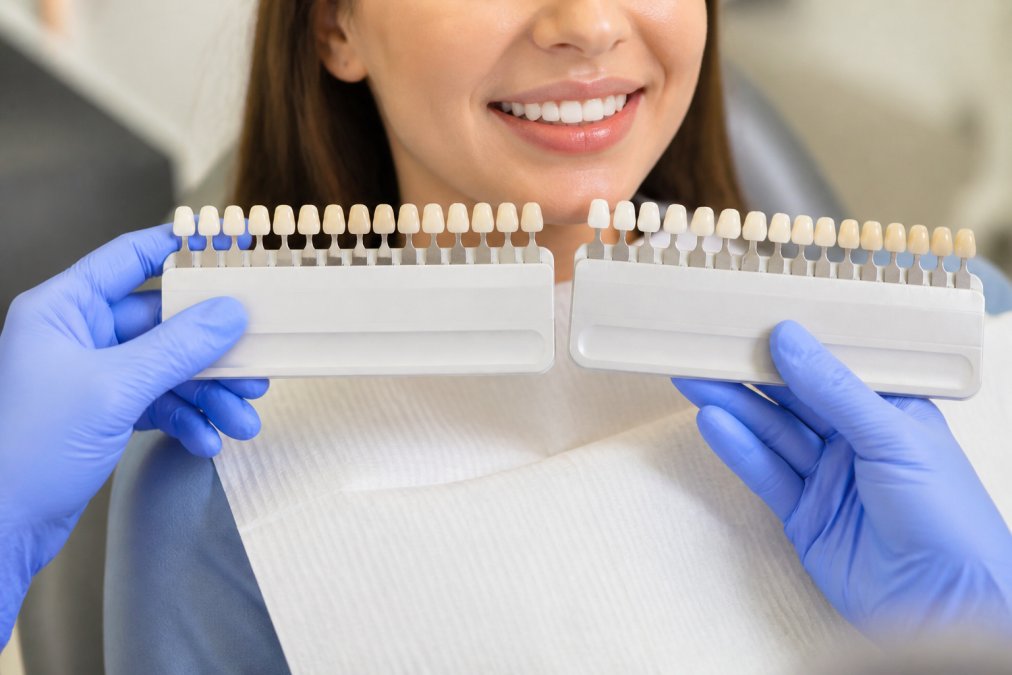
Porcelain veneers are made in a dental laboratory from a digital or physical impression of your teeth, which is why they carry a custom lab-made premium. Composite resin veneers are often sculpted directly onto the tooth in a single visit, cutting out most laboratory fees. The material itself and the technician time behind it drive the largest share of the total.
Straightforward cases with healthy enamel need minimal enamel reduction, so the appointment is shorter and the lab work simpler. Cases involving crowding, discoloration, or worn edges may need more preparation, temporary veneers, and a longer treatment plan. Every additional step adds chair time, and chair time is billed.
Porcelain and composite veneers sit at different price points because they are made differently. Porcelain is fabricated in a lab, resists staining well, and typically lasts longer. Composite is applied chairside, costs less upfront, and can be repaired more easily but tends to discolor faster.
| Feature | Porcelain Veneers | Composite Veneers |
|---|---|---|
| Where made | Dental laboratory | Sculpted chairside |
| Typical visits | Two or more | Often one |
| Stain resistance | High | Moderate |
| Lifespan | Longer with care | Shorter, needs polishing |
| Repairability | Replacement usually | Can be patched |
| Upfront cost | Higher | Lower |
The trade-off is durability against budget. Patients who want the longest-lasting aesthetic result usually choose porcelain. Patients who want a lower entry point or a reversible trial often start with composite.
The per-tooth quote is almost never the full bill. A cosmetic case is a sequence of appointments, and each stage carries its own fee. Budgeting only for the veneers themselves is the single most common reason patients are surprised at checkout.
Here is the typical cost stack, in the order it hits your statement:
Veneers compete against two cheaper alternatives: composite bonding and full crowns. Bonding costs the least upfront but typically needs repair or replacement far more often, so the cumulative spend over a decade can approach the veneer price while never delivering the same stain resistance or edge integrity. Crowns cost more per tooth than veneers and remove far more healthy tooth structure, which matters if the tooth ever needs endodontic treatment later.
The honest way to frame the value is cost-per-year-of-service. A porcelain veneer that lasts 12 to 15 years with good care spreads its cost across a much longer window than a composite that needs polishing or replacement every few years. That math only works if you actually maintain the work, cleanings, a guard, and no ice-chewing.
Dental insurance coverage for dental veneers arizona is rare because most plans classify them as elective cosmetic treatment. If a veneer is placed to restore a tooth damaged by trauma or needed after a restorative procedure, part of the cost may qualify, but this depends on your specific plan and how the claim is coded.
Financing options are where most patients find relief. Third-party healthcare credit lines such as CareCredit's patient financing information let you split the cost into monthly payments, subject to credit approval. Many practices, including Family & Cosmetic Dental PLLC, also offer flexible payment arrangements and accept a wide variety of PPO insurance plans, plus an in-house savings plan for patients without coverage.
Dental veneers last roughly 10 to 15 years for porcelain and shorter for composite, though the range depends heavily on your habits and maintenance routine (the American Dental Association). Longevity is not a fixed number; it is a function of care.
Maintenance costs are modest compared with the initial investment. Budget for:
Patients who treat their veneers like natural teeth, minus the bad habits, get the most years out of them. The American Dental Association's guidance on cosmetic procedures is a useful starting point for understanding what professional oversight a cosmetic case should include.
Most guides give you a single statewide range and stop. That is not useful, because a veneer quoted in one metro market and a veneer quoted two hours away can differ by hundreds of dollars per tooth, and the difference is not always about quality.
Four cost drivers shift by geography:
Composite resin veneers typically cost less than porcelain because they are applied directly in the office and do not require a dental lab. However, they may need replacement sooner. For patients in Arizona, options like in-house savings plans or third-party financing through CareCredit can spread out-of-pocket expenses. Always ask for a full treatment plan that breaks down per-tooth costs, lab fees, and any follow-up visits before committing.
Composite veneers generally have a lower upfront cost than porcelain, but they may not last as long and can stain more easily. Porcelain veneers are custom lab-made, which adds to the price but offers better stain resistance and longevity. The porcelain vs composite veneers cost difference often reflects material durability and lab work. A consultation with a dental professional can help you weigh the long-term value against your budget.
Most dental insurance plans classify veneers as cosmetic and do not cover them. However, if a veneer is needed for restorative reasons after an accident or to protect a damaged tooth, partial coverage may be possible. PPO plans vary widely. Check your specific policy and ask your dental office to submit a pre-treatment estimate so you understand your out-of-pocket expenses before scheduling.
The total cost depends on the material chosen, the number of teeth treated, the complexity of your case, and the dental laboratory fees. Additional factors include whether you need temporary veneers, any preparatory work like enamel reduction, and follow-up visits. In Arizona, prices can also vary by region and practice. A clinical evaluation and treatment plan will give you the most accurate estimate for your situation.


