
Family & Cosmetic Dental PLLC
- Home
- Our Practice
- Services
- Patient Information
- Blog
- Contact Us
Last Updated: October 20, 2026
A dental bridge vs implant cost comparison starts with one uncomfortable truth: the cheaper option on the invoice is not always the cheaper option over time.
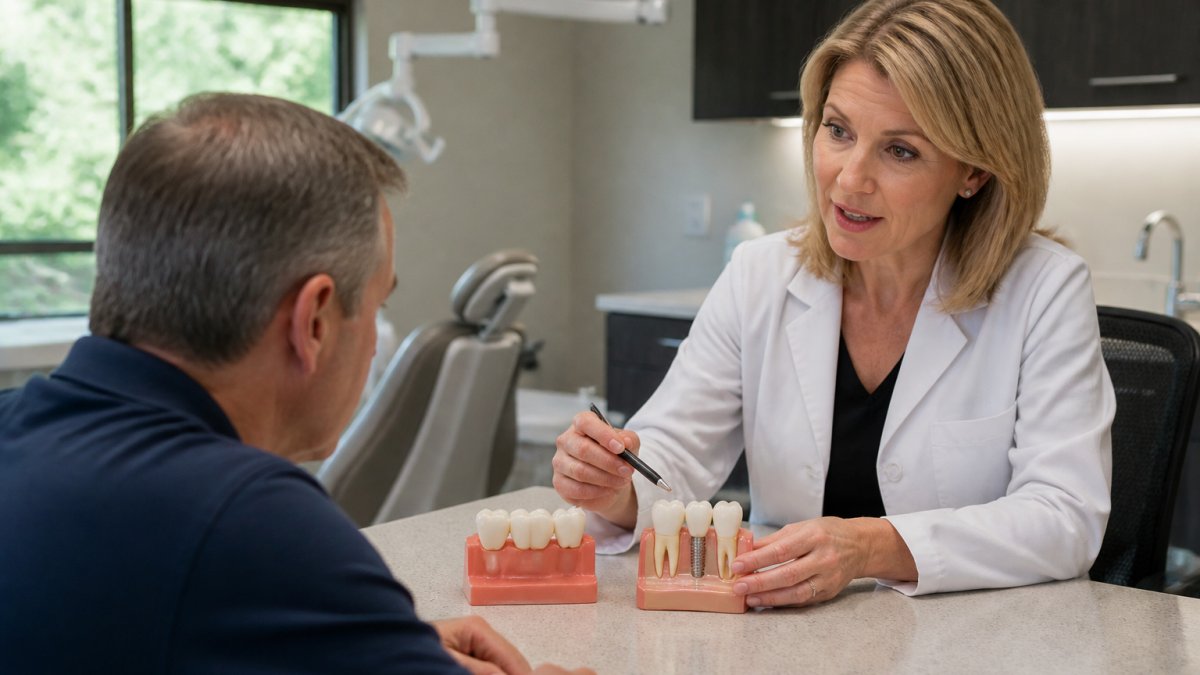
A dental bridge is a fixed restoration that anchors artificial teeth to adjacent natural teeth.
Below, we break down what drives each price, how insurance treats them, and what to ask before you commit.
Neither option has a single sticker price, but the cost drivers differ enough to compare side by side.
| Cost Factor | Dental Bridge | Dental Implant |
|---|---|---|
| Main components | Crowns on adjacent teeth + pontic | Implant post + abutment + crown |
| Typical visits | Fewer, compressed timeline | More, spread over months |
| Bone grafting | Rarely needed | Sometimes required |
| Adjacent tooth prep | Required | Not required |
| Lab work | Yes | Yes |
| Healing time | Minimal | Months of integration |
A bridge means paying for three or more units of lab work, not one: two crowns on the supporting teeth plus the replacement tooth between them, each with its own fee, which is why a single-tooth bridge often costs more than patients expect.
Here is what actually shows up on a bridge treatment plan:
What most guides miss is the hidden cost of tooth preparation. Once a healthy adjacent tooth is reduced for a crown, it stays reduced, with its own long-term maintenance needs, and if it fails, the bridge fails with it.
A dental implant costs more upfront because you are paying for a surgical procedure, a prosthetic component, and the planning that connects them. The post is only one line item; the abutment, crown, imaging, surgery, and follow-up all carry separate costs.
The component breakdown looks like this:
A common mistake is comparing the price of a bridge to the price of an implant post alone. The honest comparison is bridge total versus implant total, including every component and visit.
The healing period is part of the cost story: implants need time for bone to integrate with the post before the final crown goes on, which is also why they do not require preparing the neighboring teeth.
The dental bridge vs implant lifespan question is where the long-term cost picture changes, but only if you are honest about the assumptions. A defensible 10-year comparison must state its time horizon, replacement assumptions, maintenance costs, and inflation logic; otherwise it is just a headline price wearing a lab coat.
A 10-year window is the most common comparison period: long enough to capture at least one bridge replacement, short enough to stay realistic. The key assumption is how many times each option has to be redone.
Neither assumption is guaranteed. They are the inputs that make the comparison reproducible instead of rhetorical.
Long-term cost is not only the big redo, but the small recurring spend patients forget to budget for:
These costs are modest per visit but compound over a decade; ignoring them favors the lower headline price, not the lower total. (Source: dental insurance coverage for bridges and implants)
Dental fees rise over time, so a replacement bridge 10 years from now will not cost what one costs today. Apply a modest annual inflation assumption to future procedures for both options; the exact rate matters less than applying one consistently.
Below is the structure of the comparison, with placeholder inputs you can replace with your own quotes. The point is the method, not a single national number.
| Line item | Bridge scenario | Implant scenario |
|---|---|---|
| Initial treatment total (itemized quote) | $[your quote] | $[your quote] |
| Replacement within 10 years | 1 replacement assumed | 0 implant replacements assumed |
| Crown replacement on top | Included in bridge replacement | 1 crown replacement assumed |
| Annual maintenance (cleanings, monitoring) | $[your estimate] × 10 | $[your estimate] × 10 |
| Inflation applied to future procedures | [rate]% per year | [rate]% per year |
| 10-year total | Sum of the above | Sum of the above |
Anyone who quotes a guaranteed lifespan is skipping the part where your own habits decide the outcome. Longevity depends on gum health, bone quality, oral hygiene, smoking status, bite forces, and follow-up attendance. Treat any single lifespan number as a planning assumption, not a promise.
Dental insurance coverage for implants and bridges is rarely equal. Many PPO plans treat a bridge as a covered restorative procedure and classify an implant as a higher-tier or excluded service. But the headline coverage percentage is not the number that matters, it is how the plan's mechanics interact with the treatment plan.
Ask for the out-of-pocket estimate in writing for both options, not just the covered percentage. A plan that covers 50% of a bridge and 0% of an implant can still leave you paying more over time if the bridge needs replacing. The written estimate is the only number that reflects the plan's real mechanics.
When the coverage gap makes an implant feel out of reach, financing bridges the clinically sound choice and the affordable one: third-party patient financing with fixed monthly payments, in-house savings plans, and phased treatment across benefit years to make better use of annual maximums. At Family & Cosmetic Dental PLLC, we accept a wide variety of PPO insurance plans and offer flexible payment options, including third-party financing and an in-house savings plan, because the coverage gap is often the real obstacle.
Do not assume the plan with the higher coverage percentage is the better deal. A plan that covers 80% of a lower-cost service with a low annual maximum can leave you paying more than a plan that covers 50% of a higher-cost service with a higher maximum. Compare the out-of-pocket estimate, not the percentage.
Price varies by location, how many teeth are missing, and what your mouth needs before any restoration can be placed. A single missing tooth in a healthy mouth is a very different financial picture from several missing teeth with bone loss and gum disease.
The biggest variables:
Comparing quotes from two offices without comparing the treatment plans is a common mistake. One quote may exclude grafting, imaging, or the final crown, making it look cheaper when it simply covers less.
The right choice depends on your clinical situation, budget, and tolerance for a longer timeline. Here is the honest trade-off list for each.
Dental bridge pros:
Dental bridge cons:
Dental implant pros:
Dental implant cons:
For a patient with healthy neighboring teeth, good bone, and a long time horizon, the implant often wins on lifetime cost. For someone managing dental anxiety, the shorter, non-surgical bridge timeline may be the deciding factor.
At Family & Cosmetic Dental PLLC, we take a conservative approach and talk through both paths before recommending one.
The real challenge with a dental bridge vs implant cost comparison is that the cheapest option today is not always the cheapest over the next decade.
A dental bridge usually costs less upfront because it does not require surgery or a titanium post. A dental implant costs more at the start since it involves the implant post, an abutment, and a crown, plus possible bone grafting. Exact prices depend on your location, the number of missing teeth, and whether a specialist is involved. Ask your dentist for an itemized treatment plan so you can compare like-for-like numbers instead of a single quote.
Implants generally last longer. With good oral hygiene and regular follow-up visits, an implant-supported restoration can last decades, while a traditional bridge often needs replacement sooner because the supporting teeth and jawbone change over time. Lifespan depends on gum health, bone loss, and maintenance. Your dentist can assess your candidacy and explain realistic expectations for your situation.
Many PPO plans cover part of a dental bridge because it is classified as restorative care, while dental insurance coverage for implants varies more widely and often comes with annual maximums and waiting periods. Some plans exclude implants or require pre-authorization. Check your plan's annual limit and ask the office to verify benefits before treatment so you know your out-of-pocket cost.
The answer depends on how long you keep each restoration. A bridge has a lower initial cost, but replacement and repair costs can add up if it needs to be redone. An implant costs more upfront but may need fewer replacements over a lifetime. Ask for a 10-year estimate that lists assumptions about replacement timing, follow-up visits, and maintenance so the comparison is transparent.


