
Family & Cosmetic Dental PLLC
- Home
- Our Practice
- Services
- Patient Information
- Blog
- Contact Us
Last Updated: September 14, 2026
Most people wait until something hurts before they call a dentist, and that wait is expensive. A small cavity caught at a routine visit is a simple filling; ignored for two years, it can become a root canal or an extraction (Root Canals | MouthHealthy). When you book new patient dental cleaning appointments on schedule, you catch problems while they are still cheap and simple to fix.
At Family & Cosmetic Dental PLLC, we see this constantly: patients who avoided care for years, then arrived in pain. Preventative care breaks that cycle. A routine prophylaxis removes plaque and tartar before it damages enamel or irritates gum tissue, and a comprehensive exam gives your dentist a baseline for your periodontal health.
Here is what most people miss: the first visit is not just a cleaning but a full assessment of your mouth, bite, and risk factors. That baseline makes every future visit faster and more accurate.
A new patient dental exam typically combines a comprehensive exam, dental imaging, and a professional cleaning in one appointment (the American Dental Association). The visit usually runs about an hour, longer if you need extensive X-rays or have gone years without care.
Here is the general sequence:
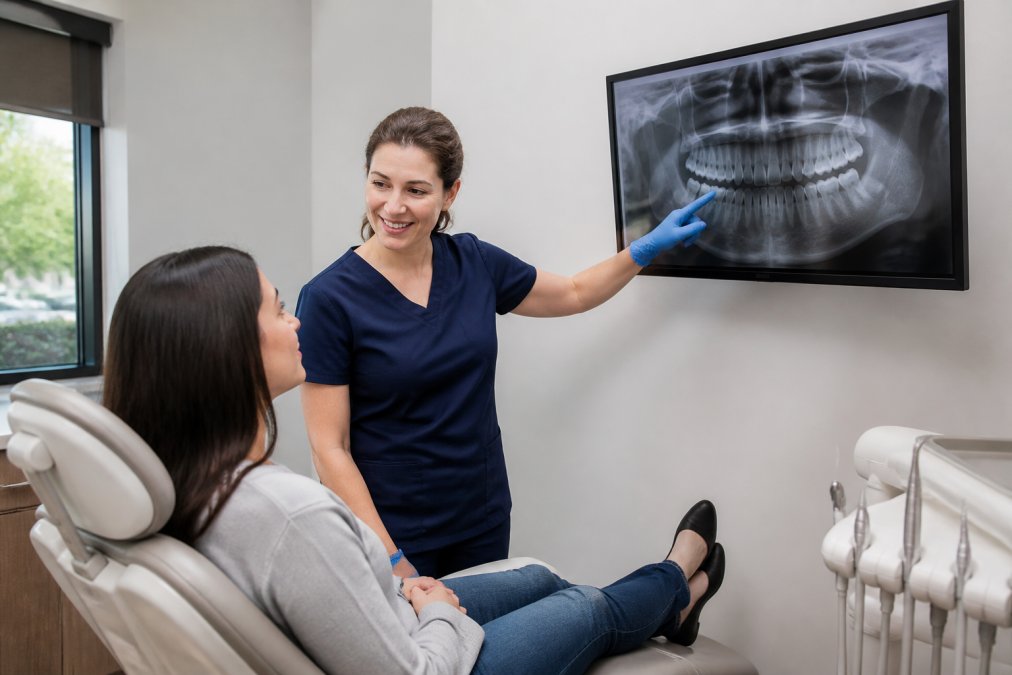
A common mistake is skipping the health history because it feels like paperwork. That history tells your dentist whether you need antibiotics before treatment, whether a medication is causing dry mouth, or whether a condition changes how your gums respond.
Preparation for a first dental visit takes about ten minutes and saves real stress. Bring your insurance card, photo ID, and a list of medications and dosages, and request records from a previous dentist ahead of time.
A few things that help:
If you are coming from another practice, expect repetition: your new dentist will still want their own X-rays and measurements, because clinical diagnosis depends on images and data they can see for themselves.
Booking a new patient dental cleaning takes one phone call or one online form, whether you are a first-time patient or returning after years away. The part most booking pages skip is verification: confirming your benefits before you sit in the chair prevents a surprise bill later.
Dental cleaning cost without insurance depends on your location, the type of cleaning you need, and whether X-rays and an exam are included. There is no single national figure, and any office quoting an exact price before seeing your mouth is guessing. Build a realistic estimate before you call so you can compare quotes apples to apples.
What drives the cost up or down:
| Factor | What It Means for Your Bill |
|---|---|
| Cleaning type | A routine prophylaxis (D1110) is the least expensive. Periodontal maintenance (D4910) and scaling and root planing (D4341/D4342) cost more because they take longer and often require numbing. |
| X-rays | A full mouth series or panoramic X-ray adds to the total. A single bitewing costs less. Many new-patient specials bundle X-rays into one flat fee. |
| Exam and consultation | Often bundled with the cleaning, sometimes billed separately. Ask which. |
| Location | Office overhead varies by metro area, and so do fees. A practice in a high-rent district will charge more than one in a suburb for the same procedure code. |
| New patient special | Many practices bundle exam, X-rays, and cleaning at one rate. Ask what the special excludes, fluoride, sealants, and deep cleaning are common exclusions. |
If you are paying out of pocket, ask three questions before you book: what the quoted fee includes, what costs extra, and whether the practice offers an in-house savings plan or third-party financing. Family & Cosmetic Dental PLLC accepts a wide variety of PPO insurance plans and offers flexible payment options, including an in-house savings plan, for patients without coverage.
A practical way to estimate your out-of-pocket number is to ask for the practice's fee schedule for the procedure codes you expect to be billed. A new patient visit typically involves three: the comprehensive exam (D0150), the X-rays (D0210 for a full mouth series or D0274 for four bitewings), and the cleaning itself (D1110). Ask for the cash-pay price for each, add them up, and that total is your realistic worst case if nothing else is found.
If you have insurance, the same framework applies in reverse. Your plan's negotiated rate for each code is usually lower than the cash-pay price, and your out-of-pocket cost is the difference between that rate and what your plan pays. Calling your carrier with the three codes above and asking for the allowed amount for each is the fastest way to predict your bill.
Dental anxiety is common, not a character flaw, and plenty of adults avoid the dentist for years after one bad experience. Renee C., a patient of Dr. Pulkrabek, put it plainly: "I have pretty severe dental anxiety and he is the only reason I'm able to show up for my six month cleanings."
What actually helps:
Charles B., another patient, described the team this way: "Office staff, simply put, are just darn good people." That matters more than most people expect. The right team turns a dreaded appointment into a routine errand.
A healthy mouth cleaning, also called routine prophylaxis, removes plaque and tartar from above and just below the gumline. It is what most people mean by "a cleaning," done at a standard six-month visit.
A deep cleaning, clinically called scaling and root planing, goes further: it treats active periodontal disease by cleaning below the gumline and smoothing root surfaces. It usually requires numbing and is often split across two or more appointments.
The difference matters for your budget and schedule. If your gum pockets have deepened and your gums bleed easily, a routine cleaning will not fix the problem; your dentist will recommend periodontal maintenance instead, a different procedure on a different schedule. Skipping it does not save money, it usually leads to bone loss and tooth loss.
Most new patient dental exams include a cleaning, but it depends on your gum health. If you have healthy gums, you'll likely receive a routine prophylaxis (standard cleaning). If there are signs of gum disease, your dentist may recommend a deep cleaning (scaling and root planing) instead. At Family & Cosmetic Dental PLLC, your first visit typically includes a comprehensive exam, X-rays, and a cleaning, but the type of cleaning is determined after your dentist assesses your periodontal health. Always ask when you book new patient dental cleaning to confirm what's included.
When booking, you'll need to provide your full name, contact information, date of birth, and dental insurance details if you have coverage. You may also be asked about your dental history, any current dental concerns, and your availability for scheduling. If you're transferring from another dentist, having your previous records can help. Many offices offer an online booking portal or patient registration forms to complete before your visit. For your first appointment, bring a photo ID, your insurance card, and a list of any medications you're taking.
The cost of a professional dental cleaning without insurance varies based on your location, the type of cleaning needed, and the dental office. Actual prices depend on the practice. Many offices, including Family & Cosmetic Dental PLLC, offer in-house savings plans or flexible payment options to make care more affordable. Contact the office directly for specific pricing.
A typical new patient dental cleaning appointment lasts about 60 to 90 minutes. This includes a comprehensive exam, X-rays, and the cleaning itself. The cleaning portion usually takes 20 to 30 minutes for a routine prophylaxis. If you need a deep cleaning or have extensive tartar buildup, it may take longer. Your first visit also includes time for discussing your dental history and treatment plan. Plan for at least an hour and a half to avoid feeling rushed.


