
Family & Cosmetic Dental PLLC
- Home
- Our Practice
- Services
- Patient Information
- Blog
- Contact Us
Quick Summary
The most common affordable alternatives to porcelain veneers are composite bonding, ultra-thin veneers, and removable snap-on veneers. Composite bonding usually needs little or no enamel removal and is often completed in a single visit, though it stains and wears faster than porcelain.
Porcelain veneers are one of the most expensive cosmetic dental options, so many patients look for affordable alternatives. Porcelain veneers are one of the most expensive cosmetic dental options, and the total climbs quickly once the number of teeth grows.
Much of that cost comes from the work itself. Porcelain is fabricated in a dental lab, often after the dentist removes a thin layer of enamel from each tooth.
Cost is not the only consideration. Porcelain veneers also have the highest patient satisfaction rate among the veneer types studied, at 93%, according to the National Center for Biotechnology Information study on patient response to veneer types.
Composite bonding is the most widely cited of the affordable alternatives to porcelain. Composite bonding is generally considered a minimally invasive cosmetic option because it usually requires little or no enamel removal. Cost varies depending on the number of teeth and the complexity of the work.
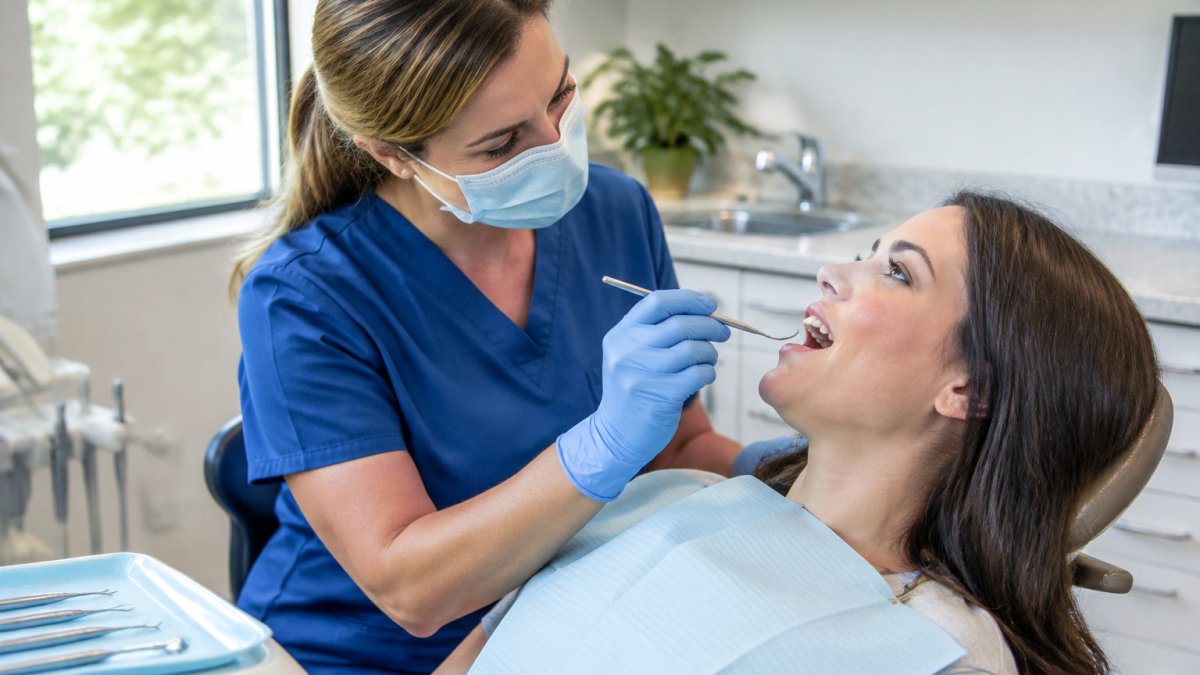
Composite bonding is typically completed in a single office visit, so patients do not need to wait for a lab-fabricated restoration.
The trade-off is durability. Family & Cosmetic Dental PLLC can explain how tooth-colored composite restorations are placed and cared for during a consultation. Explore how composite restorations are placed and cared for.
Dental bonding and veneers are often confused, but they solve different problems and carry very different long-term economics. Bonding adds tooth-colored composite resin directly to the tooth, usually in a single visit, with little or no enamel removal. Compare the durability and fit of each option in more detail. A veneer is a thin shell, porcelain or composite, bonded to the front surface of the tooth after some enamel is typically reduced. That single difference in enamel removal drives most of the downstream trade-offs in cost, reversibility, and lifespan.
Upfront price is the number patients see first, but cost per year of service is the number that actually determines value. Using the midpoints of commonly cited ranges:
Comparing cost per year of service can be more useful than comparing upfront price alone, since a less expensive restoration that needs more frequent replacement may cost about the same over time. Ask your dentist for a realistic lifespan estimate for your specific case.
Bonding that chips or stains early may need repair sooner, so proper care and bite habits matter to how long it lasts.
This is the trade-off competitors rarely spell out. Bonding is additive, in most cases no healthy tooth structure is removed, which means the procedure is effectively reversible if the patient later wants a different option. Porcelain veneers are subtractive: a thin layer of enamel is typically reduced, enamel does not regrow, and the tooth is committed to a restoration from that point forward. Ultra-thin veneers reduce less enamel than traditional porcelain but are still not fully reversible. For a younger patient or someone unsure about a permanent change, that physical commitment is often a bigger factor than the price difference.
A simple diagnostic framework helps patients self-sort before they ever sit in a chair:
Direct composite veneers have a patient satisfaction rate of 67%, while indirect composite veneers reach 82%, according to the National Center for Biotechnology Information study.
If you are comparing the two, the practical questions are: how much change do you want, how long do you want it to last, and how much natural tooth structure are you willing to give up? Our bonding vs. veneers comparison guide covers durability and when each option makes sense.
Tooth contouring, also called enameloplasty, reshapes the edges of a tooth by removing a small amount of enamel. It can smooth a jagged edge or make a tooth look more even with its neighbors.
The results are subtle. Contouring rarely changes color, so it works best alongside bonding or whitening rather than as a stand-alone smile makeover. Patients usually see the difference most clearly in how a smile lines up, not in a dramatic shift.
Enameloplasty removes enamel, which is permanent. Enamel does not regrow, so the amount removed matters. A dentist should examine your teeth first to judge whether you have enough enamel to contour safely. Sensitivity is a common short-term effect, and patients with existing decay or gum recession need extra evaluation. Whether enameloplasty suits you depends on your individual dental health, so a consultation is the right first step. Read about the benefits of enameloplasty for minor tooth imperfections.
Removable snap-on veneers are the least permanent option. They fit over existing teeth, require no drilling, and can be taken out for cleaning and sleeping. Custom versions are made from impressions taken at home. They make sense for temporary cosmetic fixes or for patients who are not candidates for permanent work. Their drawbacks include bulk, possible speech changes early on, and the fact that they do not solve underlying problems.
Ultra-thin veneers sit between the two and remove less enamel than traditional porcelain. They can offer a noticeable smile change with a smaller commitment to the tooth.
| Option | Typical Cost | Enamel Removal | Lifespan | Best For |
|---|---|---|---|---|
| Porcelain veneers | $1,765 average per tooth | Moderate | 10 to 15 years | Full smile makeovers |
| Composite bonding | $250 to $1,400 per tooth | Little to none | Shorter, prone to staining | Chips, gaps, minor discoloration |
| Ultra-thin veneers | $900 to $2,000 per tooth | Minimal | Varies | Less invasive smile changes |
| Snap-on veneers | Varies by provider | None | Removable, temporary | Temporary cosmetic fixes |
Most guides stop at "it depends on your goals and budget." A more useful approach is a short decision sequence that moves from the dental problem to the procedure, then to the money. Work through the four steps below in order.
Cosmetic complaints fall into a few categories, and each points toward a different alternative:
Before price enters the conversation, confirm the procedure fits your mouth. Gum health, existing decay, enamel thickness, and bite forces all change which options are safe. A patient with gum recession or active decay is not a candidate for elective veneers until those issues are treated. A patient who grinds their teeth is a poor candidate for composite bonding on load-bearing front teeth, because the resin wears faster under parafunction. A dentist may recommend discussing whether a crown is a better long-term restoration when a tooth has already had a large filling.
Compare options on cost per year of service, not just the sticker price. A lower-priced restoration that lasts a shorter time can cost more per year than a higher-priced one that lasts longer, depending on how each holds up in your mouth. The cheaper option is not always the lower annual cost, and the more expensive option is not always the better value, it depends on how long each restoration actually lasts in your mouth. Ask your dentist for a realistic lifespan estimate for your specific case, not the range from a brochure.
Coverage for cosmetic work varies by plan, and some plans cover bonding when it restores a fractured tooth rather than purely for appearance. Confirm coverage with your insurer before scheduling.
If you want the shortest possible path: one problem tooth and a tight budget points to bonding; several problem teeth and a long-term horizon points to porcelain or ultra-thin veneers; color alone points to whitening first; and uncertainty points to a consultation before any irreversible enamel removal. Plan for maintenance either way: composite restorations need careful oral hygiene and may need repair or replacement sooner than porcelain, and porcelain itself can chip and may need repair over time.
Every smile is different, and the right alternative depends on your teeth, your bite, and your goals. Family & Cosmetic Dental PLLC provides conservative, compassionate care for patients in Glendale and Peoria, including anchor words: porcelain veneers and anchor words: porcelain crowns.
Schedule a visit to talk through your choices, ask about payment options, and learn which approach fits your smile and budget.
Porcelain veneers are generally considered a longer-lasting restoration. Composite bonding is generally shorter-lived and is more prone to staining and chipping than porcelain. Removable snap-on veneers are not designed as permanent restorations and are meant to be worn for temporary or non-permanent use. How long any option lasts depends on oral hygiene, bite habits and how the material was placed, so a consultation can help set realistic expectations for your situation.
Tooth contouring, sometimes called enameloplasty, reshapes a tooth by removing a small amount of enamel to smooth edges or correct minor irregularities. Dental bonding adds tooth-colored composite resin to a tooth, which is then shaped and hardened with a special light. Contouring alters the natural tooth surface, while bonding builds up material on top of it. Your dentist can explain which approach fits your teeth after an exam.
Enameloplasty works best for small irregularities, such as slightly uneven edges or minor overlaps. It is generally not a fix for large gaps, significant size differences or substantial chips, where bonding or another restorative approach may be more appropriate. Because enamel removal is permanent, the dentist will assess how much tooth structure is present before recommending it. A consultation can clarify whether contouring alone will achieve the result you want.
Pricing for enameloplasty depends on the number of teeth treated, the complexity of the work and the dental practice involved. Pricing for this procedure is not published here, so please contact Family & Cosmetic Dental PLLC for current pricing or a personalized quote. The team can also review the payment options available to you.


